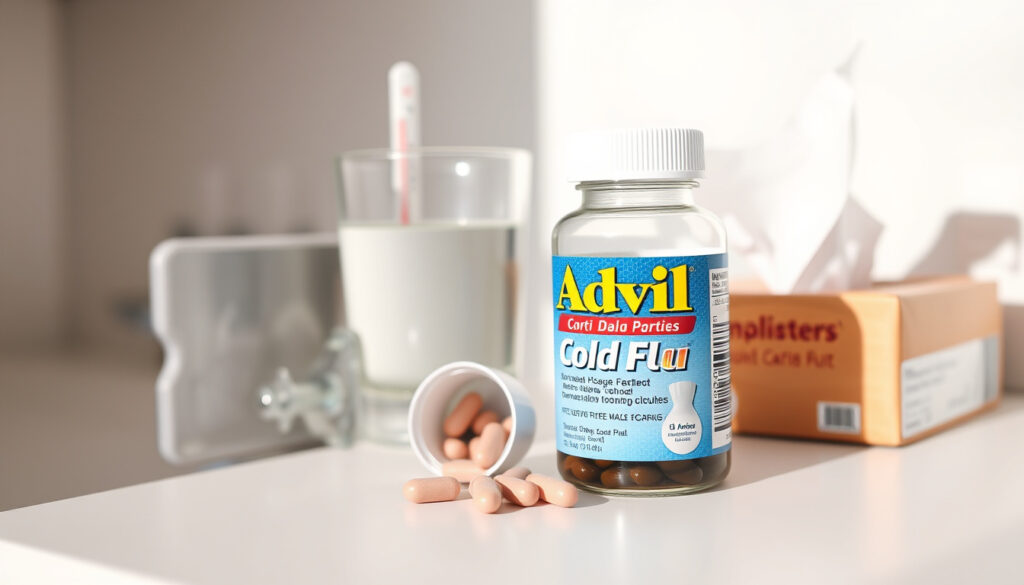
Advil Cold and Flu: Dosage, Ingredients, Safety, and Comparisons
When cold and flu season hits, reaching for the right medicine can feel like a guessing game. Advil Cold & Flu combines two active ingredients to tackle both pain and congestion, but knowing the right dose and safety rules matters just as much as picking the product.
Active ingredients: Ibuprofen 200 mg and Pseudoephedrine HCl 30 mg per tablet ·
Onset of action: 30–60 minutes (ibuprofen) ·
Maximum daily dose: 6 tablets (1200 mg ibuprofen, 180 mg pseudoephedrine) in 24 hours ·
Age minimum: 12 years (per UK/Ireland and US labeling) ·
Common side effects: Nausea, dizziness, insomnia; rare serious effects include GI bleeding and cardiovascular events
Quick snapshot
- Contains 200 mg ibuprofen + 30 mg pseudoephedrine per tablet (Health Products Regulatory Authority (Ireland’s medicines regulator))
- Maximum daily dose is 6 tablets (1200 mg ibuprofen, 180 mg pseudoephedrine) for adults and children 12+ (Boots Ireland (Irish pharmacy chain))
- Available OTC in Ireland and the US under the same active formula (Advil)
- Comparative effectiveness vs. paracetamol-based cold products for non‑inflammation symptoms
- Whether ibuprofen increases risk of cold‑related complications in specific populations (e.g., asthmatics)
- Whether the specific combination of ibuprofen + pseudoephedrine is more effective than taking them separately
- Onset of relief: 30–60 minutes after oral administration (HPRA (Ireland’s medicines regulator))
- Maximum treatment duration: 5 days unless directed by a doctor (Boots Ireland (Irish pharmacy chain))
- If symptoms persist beyond 5 days (adults) or 3 days (children), stop and consult a doctor (Advil (manufacturer))
- For high blood pressure or heart disease, seek medical advice before use (NHS (UK’s national health service))
This table summarises the core specifications of Advil Cold & Flu at a glance.
| Attribute | Details |
|---|---|
| Formulation type | Dual-action; ibuprofen (NSAID) + pseudoephedrine (vasoconstrictor) |
| Onset of relief | 30–60 minutes after oral administration |
| Maximum single dose | 400 mg ibuprofen, 60 mg pseudoephedrine (2 tablets) |
| Maximum daily dose | 6 tablets (1200 mg ibuprofen, 180 mg pseudoephedrine) |
| Age restriction | 12 years and older (consistent across US and Ireland/UK labeling) |
| Contraindication examples | Severe hypertension, coronary artery disease, concomitant MAOI use |
Is Advil good for colds and flu?
Advil Cold & Flu targets the symptoms that make a cold or flu miserable — headache, fever, body aches, and nasal congestion — but it doesn’t shorten the illness itself. The Mayo Clinic (US nonprofit medical center) notes that over-the-counter pain relievers like ibuprofen can ease aches and pains of a cold, but they do not kill the virus.
How does Advil Cold & Flu compare to plain ibuprofen?
- Plain ibuprofen only tackles pain, fever, and inflammation; Advil Cold & Flu adds pseudoephedrine to relieve nasal congestion and runny nose (HPRA (Ireland’s medicines regulator)).
- The combination means you don’t need a separate decongestant, but it also means you’re getting a sympathomimetic (pseudoephedrine) that can raise blood pressure and heart rate.
Does it treat the cause of a cold or just symptoms?
- It treats symptoms only. The Mayo Clinic is clear: cold remedies relieve symptoms, not the infection.
- Antiviral medications are not indicated for typical colds caused by rhinoviruses.
How long does it take for Advil cold and flu to kick in?
- Ibuprofen typically starts working within 30–60 minutes after oral administration. Pseudoephedrine’s decongestant effect also begins within 30 minutes and peaks around 1–2 hours (HPRA (Ireland’s medicines regulator)).
The pseudoephedrine in Advil Cold & Flu provides significant congestion relief, but it also means people with high blood pressure or heart conditions need to check with a doctor first. The NHS (UK’s national health service) advises caution with decongestants in these groups.
Over-the-counter pain relievers such as ibuprofen can ease the aches and pains of a cold, but they do not kill the virus.Mayo Clinic (US nonprofit medical center)
How many Advil cold and flu do I take?
Dosing depends on age and severity. The HPRA (Ireland’s medicines regulator)-authorised patient leaflet gives clear instructions for adults and adolescents over 12.
Adults and children 12 years and older dose
- Take 1 capsule every 4 to 6 hours. For more intense symptoms, 2 capsules may be taken at a single dose (HPRA (Ireland’s medicines regulator)).
- The Boots Ireland (Irish pharmacy chain) leaflet confirms 1 or 2 tablets every 4 to 6 hours, with at least 4 to 6 hours between doses.
- In the US, Advil’s own product page says 1 tablet every 4 hours for adults and children 12+, max 6 tablets in 24 hours.
Maximum daily dose caveats
- Do not exceed 6 tablets in any 24-hour period (1200 mg ibuprofen, 180 mg pseudoephedrine) (Boots Ireland (Irish pharmacy chain)).
- Avoid taking other products containing ibuprofen or pseudoephedrine simultaneously.
- Maximum treatment duration: 5 days unless directed by a doctor (HPRA (Ireland’s medicines regulator)).
What if symptoms persist?
- If symptoms last longer than 5 days (adults) or 3 days (children 12–17), stop and consult a doctor.
- Fever that persists more than 3 days or worsens warrants medical evaluation.
The maximum daily dose of 6 tablets is the same on both sides of the Atlantic. Exceeding it risks ibuprofen overdose (GI bleeding, kidney damage) and pseudoephedrine overdose (rapid heart rate, hypertension).
The pattern: Less is more. Start with 1 tablet; only take 2 if symptoms are intense. Sticking to 4–6 hours between doses is critical for safety.
What does Advil cold and flu treat?
Advil Cold & Flu is designed for a specific set of symptoms. Knowing what it covers — and what it doesn’t — helps you choose the right product.
List of symptoms targeted
- Headache, fever, minor body aches and pains (ibuprofen component)
- Nasal congestion, runny nose (pseudoephedrine component)
- Ibuprofen reduces inflammation and pain; pseudoephedrine constricts blood vessels in the nasal mucosa to relieve stuffiness (HPRA (Ireland’s medicines regulator)).
What it does not treat (e.g., cough, sore throat)
- No effect on cough (non-productive or productive).
- No direct action on sore throat pain beyond the general analgesic effect of ibuprofen.
- Does not treat sneezing, watery eyes, or other allergy-type symptoms (those are not typical cold symptoms anyway).
What this means: If your main complaint is a hacking cough, Advil Cold & Flu won’t help. You’d need a cough suppressant or expectorant instead. For sore throat, plain ibuprofen or paracetamol may be more appropriate.
Is it better to take paracetamol or ibuprofen for a cold?
This is a common question, and the answer depends on your symptoms. Both are effective, but they work differently.
Mechanism of action: ibuprofen vs paracetamol
- Ibuprofen (NSAID) reduces inflammation by blocking prostaglandin synthesis; it’s better for body aches and inflammation.
- Paracetamol (acetaminophen) targets pain and fever but has little anti-inflammatory effect (NHS (UK’s national health service)).
When to choose one over the other
- The NHS (UK’s national health service) suggests either can be used for cold symptoms; ibuprofen is preferred if inflammation or body aches are prominent.
- For fever alone, paracetamol is often first-line because of its safety profile.
- If you have congestion, Advil Cold & Flu (ibuprofen + pseudoephedrine) has an advantage over plain paracetamol.
Can they be taken together?
- The NHS (UK’s national health service) says adults can take paracetamol at the same time as ibuprofen if needed, but recommends trying them on their own first to see if they help.
- Be careful with combination products: many cold medicines already contain paracetamol, so you could accidentally double up.
- Do not exceed 4000 mg paracetamol or 2400 mg ibuprofen in 24 hours (UK government (national pain relief poster)).
This comparison table shows how Advil Cold & Flu stacks up against paracetamol-based alternatives.
| Feature | Advil Cold & Flu (ibuprofen + pseudoephedrine) | Paracetamol-based cold remedies |
|---|---|---|
| Pain/fever relief | Yes (ibuprofen) | Yes (paracetamol) |
| Anti-inflammatory | Yes | Minimal |
| Decongestant | Yes (pseudoephedrine) | Usually added as separate ingredient |
| Maximum daily dose (ibuprofen) | 1200 mg (6 tablets) | N/A |
| Maximum daily dose (paracetamol) | N/A | 4000 mg (8 tablets of 500 mg) |
| Age minimum | 12 years | 16 years (adult strength) or 12 years (child formulation) |
| Best for | Congestion + body aches + fever | Fever + pain without congestion |
Ibuprofen acts by inhibiting prostaglandin synthesis; pseudoephedrine is a sympathomimetic agent producing vasoconstriction in the nasal mucosa.HPRA (medicines.ie) SPC for Advil Cold and Flu (Ireland’s medicines regulator)
What is Advil called in Ireland?
Brand names can be confusing, especially when travelling. Advil Cold & Flu is sold under the same name in Ireland, but there are small differences.
Advil brand names in Ireland and UK
- Advil Cold & Flu is the same brand name used in Ireland (available at Boots Ireland (Irish pharmacy chain) and other pharmacies).
- In the UK, it’s also sold as Advil Cold & Flu, but other brands like Nurofen Cold & Flu (same active ingredients) are more common.
Availability differences with US
- In the US, the equivalent product is Advil Multi-Symptom Cold and Flu, which has an identical formula per DailyMed (NIH’s drug database).
- Both are available over the counter without a prescription.
- Dosing recommendations are essentially the same: 1–2 tablets every 4–6 hours, max 6 per day.
Regulatory status
- In Ireland, Advil Cold & Flu is a pharmacy medicine (Rx or OTC depending on pack size), but the 20-tablet pack is OTC.
- Regulated by the Health Products Regulatory Authority (HPRA) (Ireland’s medicines regulator).
- In the US, it’s an OTC product regulated by the FDA.
Why this matters: If you’re used to buying Advil Cold & Flu in the US, you’ll find the same product in Ireland under the same name. But the packaging may look different, and the leaflet follows EU standards.
How to take Advil Cold & Flu safely: a step-by-step guide
Follow these steps to ensure safe and effective use.
- Check the label. Confirm you have the correct product and that it contains ibuprofen 200 mg and pseudoephedrine 30 mg.
- Age check. Do not use if under 12 years old (Advil (manufacturer)).
- Dose. Start with 1 tablet with a full glass of water. If symptoms are intense, you can take 2 tablets as a single dose (HPRA (Ireland’s medicines regulator)).
- Timing. Wait at least 4–6 hours before taking another dose. Do not take more than 6 tablets in 24 hours (Boots Ireland (Irish pharmacy chain)).
- Duration. Do not use for more than 5 days (adults) or 3 days (children 12–17) unless a doctor tells you to.
- Monitor. Stop if you experience any serious side effects: stomach pain, black/tarry stools, rapid heartbeat, or vision changes. Seek medical help immediately.
- Storage. Keep at room temperature, away from moisture and heat.
If you have high blood pressure, heart disease, diabetes, glaucoma, or an overactive thyroid, consult a doctor before taking Advil Cold & Flu. The pseudoephedrine can raise blood pressure and heart rate significantly.
What we know for sure and what remains unclear
Confirmed facts
- Advil Cold & Flu contains 200 mg ibuprofen and 30 mg pseudoephedrine per tablet (HPRA (Ireland’s medicines regulator), Boots Ireland (Irish pharmacy chain)).
- Maximum daily dose is 6 tablets (1200 mg ibuprofen, 180 mg pseudoephedrine) for adults and children 12+ (Advil (manufacturer)).
- Product is available OTC in Ireland and the United States under the same active formula (DailyMed (NIH’s drug database)).
What’s unclear
- Comparative effectiveness vs. paracetamol-based cold products for non‑inflammation symptoms (e.g., cough, sore throat).
- Whether ibuprofen increases risk of cold‑related complications in specific populations such as asthmatics — evidence is mixed.
- Whether the specific combination of ibuprofen + pseudoephedrine is more effective than taking them separately.
Expert perspectives on Advil Cold & Flu
Adults and children 12 years and over: take 1 to 2 tablets with water every 4 to 6 hours; do not take more than 6 tablets in 24 hours unless directed by a doctor.DailyMed label (NIH’s drug database)
Ibuprofen acts by inhibiting prostaglandin synthesis; pseudoephedrine is a sympathomimetic agent producing vasoconstriction in the nasal mucosa.HPRA (medicines.ie) SPC (Ireland’s medicines regulator)
For the Irish reader, the choice between Advil Cold & Flu and a paracetamol-based product is clear: if you have body aches and congestion, the dual-action formula works well. But if you have high blood pressure, heart concerns, or are taking other medications, paracetamol remains the safer bet — and you can always add a separate decongestant if needed.
The catch: always check with a pharmacist if you are on other medications, especially blood pressure drugs or antidepressants.
fhft.nhs.uk, inishpharmacy.com, ouh.nhs.uk, assets.hpra.ie, newsframe.co.uk, flatleyspharmacy.ie, yourhealth.leicestershospitals.nhs.uk
Frequently asked questions
Can I take Advil cold and flu with other medications?
Avoid taking with other products containing ibuprofen or pseudoephedrine. You can take paracetamol at the same time if needed, but check with a pharmacist first. Do not combine with MAOIs or other blood pressure medications without consulting a doctor.
What should I do if I miss a dose?
Take it as soon as you remember, but skip it if it’s almost time for the next dose. Never double up to make up for a missed dose.
Is Advil cold and flu safe for high blood pressure?
Pseudoephedrine can raise blood pressure. If you have high blood pressure, consult your doctor before using this product. The NHS (UK’s national health service) advises caution with decongestants in hypertensive patients.
Can children under 12 take Advil cold and flu?
No. The product is only for adults and children 12 years and older. Younger children should use age-appropriate formulations.
Does Advil cold and flu make you drowsy?
No, it is not labelled as a sedating product. However, some people may experience dizziness or mild drowsiness. Avoid driving if affected.
How should I store Advil cold and flu tablets?
Store at room temperature (15–25°C), away from moisture and direct sunlight. Keep out of reach of children.
For the Irish consumer, the decision is straightforward: Advil Cold & Flu is a powerful option for cold and flu symptoms that include congestion and body aches, but it’s not for everyone. If you have hypertension, heart disease, or are over 65, talk to a pharmacist or doctor before using it. For most otherwise healthy adults, it offers fast, effective relief — just stick to the label limits and don’t use it for more than 5 days.
Readers concerned about medication safety may also find our guide on Can I Take 10 mg of Melatonin? Safety Tips useful, and our article on Maximum Dose of Sertraline for Adults: 200 mg Limit provides additional context on dosing limits.
More related posts
 How to Fix a Dryer: Common Problems and DIY Solutions
 Coca-Cola Share Price: Live KO Quote, Forecast & Dividend
 Granny Square Crochet Patterns: Free for Beginners
 How to Bake Sweet Potatoes: Time, Temp, and Crispy Tips
 Hand Foot and Mouth Rash: Symptoms, ID & Treatment
 Dublin to Edinburgh Flights: Time, Cost & Tips
 Ireland v Italy Score: Six Nations Head-to-Head & History
 Sesame Chicken Near Me: What It Is, Nutrition, and Where to Order
