Kissing the Blarney Stone: Legend, Risks & How to Do It
Most tourists who make the climb to Blarney Castle’s battlements expect a straightforward peck on an old stone. Instead, they find themselves bent backward over a parapet, gripped by iron bars, trusting a castle attendant to lower them toward a slab that thousands of lips have touched before theirs. The Blarney Stone has been kissed in that precarious position for centuries — but only recently did the castle start spraying it with a WHO-approved cleanser between visitors. Whether that makes the ritual cleaner or the legend still intact is the question this article takes on.
Location: Blarney Castle tower, Ireland ·
Legend Benefit: Gift of the gab (eloquence) ·
Kissing Position: Upside down, body lowered ·
Official Source: blarneycastle.ie
Quick snapshot
- Gift of eloquence (A Little Adrift)
- Blarney Castle origin (IrishCentral)
- Upside down position (A Little Adrift)
- Helper assistance required (A Little Adrift)
- Fall potential (A Little Adrift)
- Hygiene concerns (IrishCentral)
- Tickets required (Hindustan Times)
- Castle grounds extra (Hindustan Times)
The key facts below summarize location, stone position, legend effect, kissing method, safety features, and primary source for the Blarney Stone experience.
| Fact | Detail |
|---|---|
| Location | Blarney Castle, Cork, Ireland |
| Stone Position | Parapet wall, upside down |
| Legend Effect | Eloquence or gift of the gab |
| Kissing Method | Lean backwards over gap |
| Safety Features | Iron bars and attendants |
| Primary Source | blarneycastle.ie |
What is the Blarney Stone and Why Do People Kiss It?
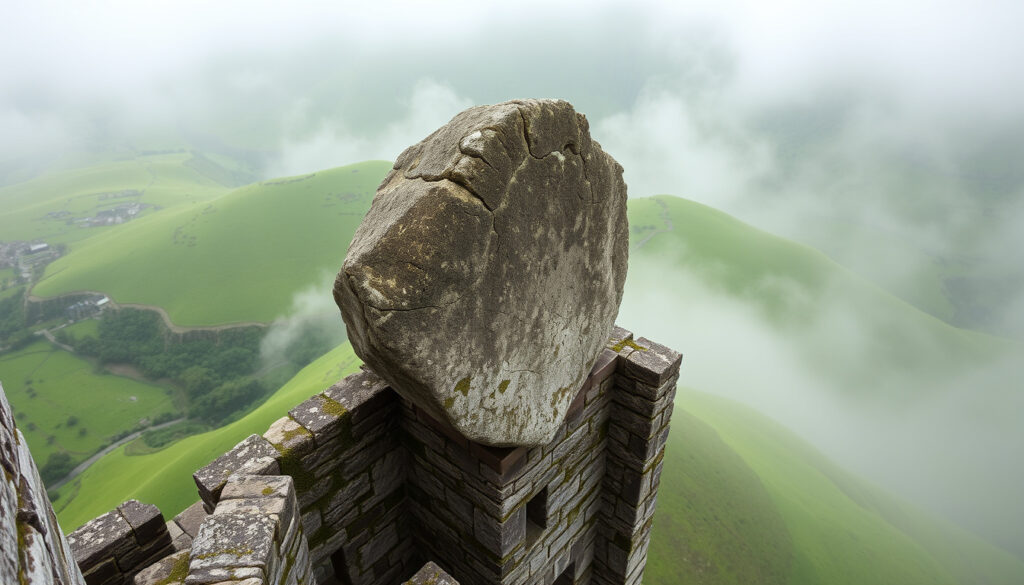
The Blarney Stone is a block of bluestone set into the battlements of Blarney Castle in County Cork, Ireland — a structure that dates to the 12th century. According to the most commonly cited legend, the stone was a gift from Robert the Bruce to Cormac McCarthy in 1314 after the Battle of Bannockburn, rewarding the Irish king for his support during the Scottish wars.
Legend of the gift of the gab
An old Irish poem captures the promise that has drawn visitors for centuries: “There is a stone there, whoever kisses, Oh! He never misses, to grow eloquent.” That gift of eloquence — informally called the “gift of the gab” — remains the core reason people line up at the tower, willing to contort their bodies for a moment of contact with a cold, damp slab. The word “blarney” itself has entered the English language to mean beguiling or flattering talk, a testament to the legend’s cultural staying power.
Historical origins
Historians note the stone has no verified first-kiss date. The gift-from-Robert-the-Bruce story is one of several competing origin tales; another attributes the eloquence-granting power to a witch that a 15th-century castle owner rescued. What is certain is that the kissing tradition had become well established by the time safety modifications were added, and it continued uninterrupted for nearly 600 years — until a global pandemic forced a pause.
The Blarney Stone is one of Ireland’s most recognizable landmarks precisely because of this legend. For visitors, understanding the origin story adds weight to the ritual — it’s not just a photo op, but a participation in a tradition that predates modern tourism by centuries.
Why Do You Kiss the Blarney Stone Upside Down?
No visitor reaches the Blarney Stone standing upright. The stone sits low in the castle’s parapet wall, positioned so that a person standing on the walkway would need to look downward at it — not ideal for a kiss. The solution has always been to lean backward, reversing gravity so the lips meet the stone instead of the stone meeting the lips.
Stone’s position in the wall
The stone is embedded in the north-facing battlements, roughly at chest height when the walkway is viewed from inside. To reach it, visitors step to a specific spot where the parapet opens and a metal railing provides something to grip. From there, the body must tip backward over a gap — held only by the bars and whatever help the staff provides.
Assistance from handlers
Castle attendants play an active role in the process. They position themselves behind the visitor, gripping clothing or the safety harness some visitors wear, and slowly lower the person toward the stone. One visitor described the sensation as “being controlled descent into a medieval game of trust.” The process takes seconds, but requires full cooperation from the person being lowered.
Why is the Blarney Stone So Hard to Kiss?
The difficulty is a combination of physics and fear. Visitors must hold iron bars, arch their backs, and let their upper body drop toward the stone — all while fighting the instinct to tense up. For most people, the challenge is mental more than physical.
Physical challenges
The position requires stretching the neck and upper torso backward, which can strain the lower back. Travel bloggers at A Little Adrift with back issues have reported discomfort or decided to skip the kiss entirely. The spiral staircase leading to the top adds to the physical toll before visitors even reach the stone.
Safety measures
Safety bars were added within the past century — before that, visitors dangled by their ankles from the parapet. Modern visitors grip the bars while staff stabilize their descent. The bars are disinfected between visitors along with the railings and anti-slip mats that line the walkway.
The position is counterintuitive and mildly terrifying even for confident swimmers. Visitors with mobility limitations or significant back pain should consider the alternative: kissing their own hand and pressing it to the stone instead of going upside down.
Has Anyone Fallen Kissing the Blarney Stone?
No documented cases of a visitor falling from the Blarney Stone parapet have been recorded in modern times. The safety bars, staff assistance, and the relatively short drop distance (the stone sits only slightly below walkway level) create a controlled environment — though “controlled” depends heavily on the visitor’s ability to stay calm while upside down.
Reported incidents
Historical records are sparse, but the Rick Steves travel community and various visitor forums contain anecdotes of nervous visitors gripping too tightly, losing their nerve mid-descent, or needing to be steadied by staff. These are incidents of panic or awkwardness, not falls. Before the safety bars were installed, ankle-dangling was the norm — a practice that sounds far more dangerous by modern standards.
Deaths or injuries
No deaths have been linked specifically to the Blarney Stone kissing process. IrishCentral reports that Blarney Castle owner Sir Charles Colthurst stated no one has ever caught a disease from kissing the stone, a claim his family has stood behind publicly. Whether the lack of documented illness reflects good hygiene or simply luck remains debated among hygiene experts.
The physical challenge of the upside-down position is the real safety concern for most visitors. People with back problems, vertigo, or poor grip strength face disproportionate risk and should weigh whether the experience justifies that exposure.
Is It Sanitary to Kiss the Blarney Stone?
This is where the tradition meets its most persistent controversy. TripAdvisor and travel writers have repeatedly ranked the Blarney Stone among the world’s least hygienic tourist attractions, citing the thousands of annual kissers who have pressed their lips to the same surface. IrishCentral reports it was listed in “101 Places Not to See Before You Die” specifically for traces of spit left behind with every kiss.
Cleaning practices
Post-COVID, the castle introduced protocols that represent a significant upgrade from pre-pandemic practice. The stone is now sprayed with a WHO-approved cleanser that kills 99.9% of germs and viruses after each individual kiss. Linda On The Run notes that staff wear face shields and gloves, changed after each person, and that high-touch areas including railings and mats are disinfected between visitors.
Visitor concerns
The cleaning protocols address the modern concern, but some visitors circulate unverified stories — such as the claim that locals once urinated on the stone at night — that the castle has neither confirmed nor denied. Facility Executive Magazine reports that hygiene experts recommend spray-and-vac systems for high-touch surfaces like the stone, which aligns with the castle’s current approach. Whether a 99.9% kill rate on a shared surface is sufficient for visitors who have kissed thousands of others is a personal judgment call.
“To my knowledge no one has ever caught anything from kissing the stone. I had an esteemed expert clarify that you cannot catch any disease from kissing the stone.”
— Sir Charles Colthurst, Blarney Castle owner
Upsides
- Active WHO-approved hygiene protocols post-COVID
- Staff assistance reduces fall risk significantly
- Historical tradition with cultural significance
- Alternative hand-kiss available for mobility-limited visitors
Downsides
- Shared surface touched by thousands annually
- Physical position challenging for back or mobility issues
- Limited documentation of disease transmission (or lack thereof)
- Pre-COVID hygiene standards unknown
How to Kiss the Blarney Stone: Step by Step
For visitors who decide the experience is worth the effort, here’s what the process actually looks like on the ground.
- Climb the spiral staircase. The ascent involves tight, uneven steps leading to the top of the tower. Allow extra time if traveling with children or anyone with mobility limitations.
- Join the queue at the parapet. Staff manage the flow and will indicate when it’s your turn. Photos may be taken during the kiss and offered for purchase afterward.
- Position yourself at the railing. Grip the iron bars firmly with both hands. Lean forward slightly to engage your core.
- Accept the assist. An attendant will position themselves behind you, grip your clothing or harness, and prepare to lower you backward.
- Lean and descend. On signal, shift your weight backward and let the attendant guide your descent toward the stone. Bring your face to the stone — don’t rush the contact.
- Press your lips. A brief kiss is sufficient. Once done, the attendant will guide you back to a standing position.
- Exit and purchase photos. Visitors can buy professional photos of the kiss. The staff disinfects the bars and stone before the next visitor.
The step-by-step process sounds straightforward in description but feels disorienting in practice. Visitors who have done it compare it to a carnival ride in a medieval setting — the thrill depends partly on surrendering control to the attendants and trusting the setup.
Confirmed Facts and Unverified Rumors
When evaluating the Blarney Stone’s history and safety record, it’s worth separating what is documented from what circulates as unverified chatter.
Confirmed
- Legend tied to eloquence poem dates back centuries
- Stone set into Blarney Castle tower in County Cork, Ireland
- Upside-down kissing required due to stone’s position
- Kissing halted for first time in nearly 600 years during COVID (2020)
- Castle owner Charles Colthurst resumed kissing in 2020
- WHO-approved cleanser used post each kiss
Unclear
- Exact number of falls or injuries over the stone’s history
- Historical first kiss date — no verified record exists
- Comprehensive medical documentation of disease transmission or lack thereof
- Whether the “urinating local boys” rumor has any factual basis
The implication is that visitors must weigh a centuries-old tradition against incomplete safety data — the legend’s strength makes the stone worth kissing, but the unknowns mean caution remains warranted.
What Experts and Visitors Say
“The Blarney Stone, one of Ireland’s most popular tourist destinations, has made the list of the worst sites in the world to visit because of traces of spit left behind with every pucker.”
— Catherine Price, author of ‘101 Places Not to See Before You Die’
“There is not much our industry can do about cleaning up the Blarney Stone.”
— Matt Morrison, communications manager for Kaivac (hygiene equipment manufacturer)
The divergence between these two perspectives captures the core tension: one travel writer calls the stone a hygiene hazard worth avoiding, while a cleaning industry professional suggests the surface presents a cleaning challenge that even professional-grade equipment struggles to fully address after each individual kiss. The castle’s own protocols suggest they take the concern seriously — but the fundamental issue of a shared, lip-contacted surface remains.
Visiting the Blarney Stone Today
The Blarney Stone sits within the broader Blarney Castle estate, which includes gardens, a Poison Garden (whose toxic plants visitors cannot touch, taste, or smell), and the castle ruins themselves. Tickets are required for the full castle experience; the stone is accessed as part of the tower climb. Hindustan Times reports that visitor numbers were limited post-reopening for safety, though capacity has likely normalized since 2020.
For visitors weighing whether to kiss, the decision breaks down simply: those who value the tradition and don’t mind sharing a surface with history can participate under cleaner protocols than any pre-COVID visitor experienced. Those who are germ-conscious or physically uncomfortable with the position can kiss their own hand and press it to the stone — a compromise the castle staff reportedly accommodates without objection.
For visitors to Ireland who make the journey to County Cork, the Blarney Stone remains one of those encounters that is more memorable for being slightly absurd than for any proven eloquence-granting power. Whether you pucker up or walk away, the climb to the battlements is worth the price of admission on its own.
Related reading: Dublin Zoo Wild Lights 2025 – Dates, Tickets and Full Guide · Punchestown Festival 2025 Dates – Schedule, Tickets and Guide
lindaontherun.com, thetravel.com, ariannamerritt.com, community.ricksteves.com
Many visitors kissing the Blarney Stone at the castle afterward opt for Premier Inn near Blarney Castle to ensure convenient access for return trips.
Frequently asked questions
What is the meaning of kissing the Blarney Stone?
Kissing the stone is traditionally believed to grant the “gift of the gab” — eloquence in speech. The legend dates to at least the 14th century, though the exact origin story varies between sources.
Where is Blarney Castle located?
Blarney Castle is in County Cork, Ireland, approximately 8 kilometers from Cork city center. The castle and its grounds are open to visitors year-round with standard admission.
What else is there to do at Blarney Castle?
Beyond the stone, visitors can explore the castle ruins, walk through the gardens, visit the Poison Garden (with its collection of toxic plants), and enjoy walking trails on the estate grounds.
Do you need tickets to kiss the Blarney Stone?
Yes. The stone is accessed via the tower climb, which requires a castle admission ticket. Tickets can typically be purchased at the entrance or in advance online.
What is blarney in Irish culture?
“Blarney” has entered the English language to mean beguiling, flattering, or evasive talk — language that charmingly sidesteps the truth without quite lying. The term derives from the stone and the castle’s association with smooth-tongued rhetoric.
How long does it take to kiss the Blarney Stone?
The actual kiss takes seconds. However, visitors must climb the spiral staircase to the top, wait in queue, and complete the assisted-descent process, which can add 10–20 minutes to a visit depending on crowd levels.
Are there photos of kissing the Blarney Stone?
Yes. Castle staff typically photograph visitors during the kiss, and these photos are offered for purchase. Visitors can also take their own photos when not actively participating.
More related posts
 Inter Milan vs FC Barcelona Timeline: History, Results, and Key Matches
 Hotels for Sale Ireland: 2025 Buyer’s Guide
 Gardaí Christopher Maguire Update: Found Safe & Well
 Difference Between Affect and Effect: Simple Guide
 Ireland’s New Immigration Rules 2026: Asylum, Citizenship & More
 Punchestown Festival 2025 Dates – Schedule, Tickets and Guide
 Convert USD to EUR: Manually Convert Dollars to Euros
