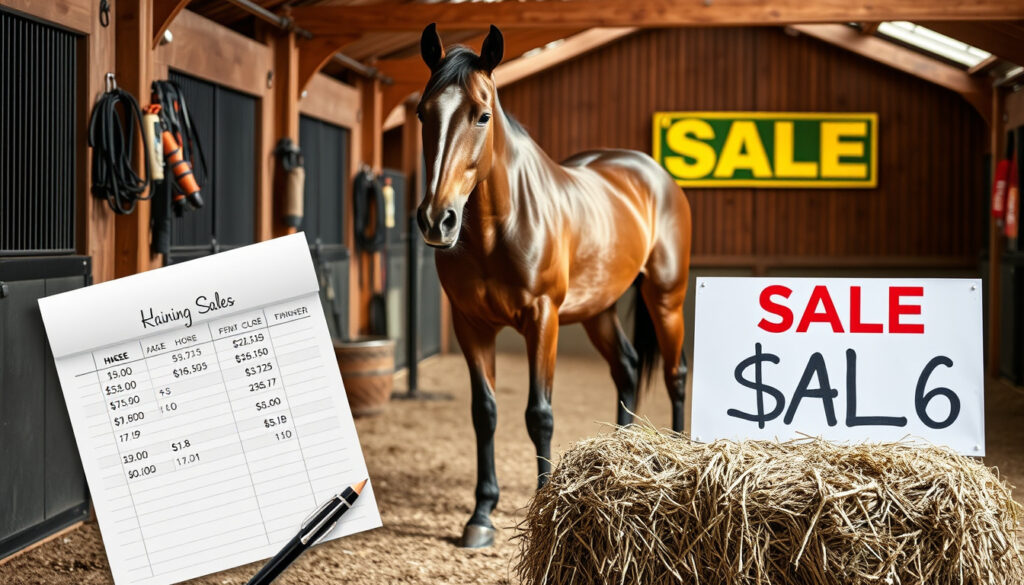
Willie Mullins Horse Sales: Training Costs, Spending & Net Worth
Anyone who has watched Willie Mullins work a sales ring long enough notices the same habit: he lets the auctioneer wait, bids late, and lands on the lots he wanted without chasing. That patience was on full display in June 2025, when he and Harold Kirk paid €1.23 million for nine horses at Tattersalls Ireland, according to the auction house’s sale report, explaining how he trains, why owners keep paying, and where the money in jump racing goes.
Year training started: 1988 · Recent spending at auctions: €2.41 million · Number of horses purchased: 13 · Years of training: 38
Quick snapshot
- Mullins and Harold Kirk bought nine lots for €1.23 million at Tattersalls Ireland in June 2025 (Tattersalls Ireland).
- His buying team spent €2.41 million on 13 horses across Goffs, Tattersalls Ireland, and Deauville in 2025, according to bloodstock trade publication BloodHorse.
- Rival trainer John ‘Shark’ Hanlon told the Irish newspaper The Irish Post that Mullins typically spends €200,000–€500,000 on a horse (The Irish Post).
- Exact training fees at Closutton today are not listed on the official yard site.
- Mullins’ net worth has never been officially disclosed. (official yard site)
- The precise number of horses in training at Closutton is not published. (official yard site)
- October 2007: last Closutton fee rise before 2016, per the racing daily Racing Post.
- September 2016: Gigginstown removes its string from Closutton after the fee increase (Racing Post).
- January 2026: the Irish national daily The Irish Times urges trainers to charge owners realistic fees.
- The next Goffs and Tattersalls Ireland store sales will show whether the buying streak continues.
- Mullins-trained horses have also appeared on online sales platforms, as the bloodstock newspaper The Irish Field reported.
Six data points, one pattern: the published costs of keeping a racehorse in training go well beyond the weekly fee.
| Metric | Value | Source |
|---|---|---|
| Training base | Closutton | Official yard site |
| Recent sale event | Tattersalls Derby Sale, June 2025 | Tattersalls Ireland |
| Closutton weekly fee after 2016 rise | €385 | Racing Post |
| 2025 Arqana purchases | 4 recruits, €525,000 | BloodHorse |
| Average training cost in Ireland | ≈ €50 per day | The Irish Times |
| Per-fixture extras (transport over 50 miles / weekend groom) | €100–€150 / ≈ €80 | The Irish Field |
Is Willie Mullins a millionaire?
The honest answer is that no one outside Mullins’ inner circle knows his exact net worth. What the sales ring shows is a trainer who spends at a level that makes the question almost beside the point.
Willie Mullins’ net worth
- His official yard biography documents winners and championships, not personal wealth.
- The closest Mullins has come to addressing the money question was in 2024, when he said that if other trainers had the owners he has, they could buy similarly expensive horses (The Irish Post).
- Public records show no verified net worth figure, which is why the conversation keeps returning to auction totals.
That comment cut to the real source of Mullins’ buying power: the owners behind Closutton. Without them, the auction totals in the snapshot above would not exist.
What this means: Mullins may not publish a net worth, but the sales ring has already priced his ambition at seven figures a season.
Spending evidence
2025 store sales: €2.41 million · Lots: 13 · Arqana: €525,000 · Arqana lots: 4
The headline totals come from BloodHorse’s sales coverage, already cited in the snapshot and table above. What the numbers show is consistency: the same buyer group, the same auction circuit, and a willingness to pay six figures for the right horse.
Rivals who buy at €5,000–€10,000 are not competing for the same horses. The 2016 fee dispute showed what happens when that gap becomes a headline: owners push back, and strings move.
The pattern: Mullins buys at the top end, works with a trusted buying partner, and treats the sales ring as an extension of the training yard.
How much is it to have a horse in training with Willie Mullins?
Closutton’s current day rate is not advertised. The best public anchor is the 2016 fee increase, which Racing Post covered in detail and which pushed Gigginstown’s string out of the yard (see the timeline above).
Typical training fees
- Weekly fees at Closutton rose from €350 to €385 in 2016 — the first increase since October 2007 (Racing Post, sourced in the table above).
- The Irish Times estimates the average cost of keeping a horse in training in Ireland at about €50 a day, and argues trainers should charge owners realistic fees rather than complain about prize money (sourced in the table above).
- The Irish Field’s industry survey found owners paying €100–€150 for transport on round trips over 50 miles, plus about €80 in weekend expenses for a travelling groom (sourced in the table above).
The fee figures matter less than their timing. Mullins had not raised his weekly rate between October 2007 and 2016, which suggests the 2016 increase was a rare correction, not a regular event.
What this means: the real cost of training with a top yard is not the advertised fee but the long tail of charges that follows a horse to the races.
What is included
Owners who budget only the weekly fee will miss the real bill: the published extras add €180–€230 to a race-day trip before any prize money is counted.
The two extras The Irish Field’s survey singled out were transport and travel-groom costs, the lines that separate a local runner from an away-day runner.
The trade-off: a lower weekly fee in another yard can look attractive until the first long away trip arrives.
How many horses does Willie Mullins train?
Mullins does not publish a full headcount. The stable’s scale shows up in auction totals and in the breadth of runners at the big meetings, not in a public ledger.
Stable size
A bigger string means bigger sale bills: the 13-lot, €2.41 million store-sales season is what an expanding top-tier yard looks like in practice.
The exact number of horses in training at Closutton is not stated on the official site, and no auction report itemises Mullins’ full stable. What the records document is purchase volume, not headcount.
Recent additions
- The team spent €525,000 on four recruits at the 2025 Arqana August Sale, with BloodHorse reporting a clear target profile: yearlings that can race on the Flat over 10 to 12 furlongs before switching to jumps.
- The June 2025 Tattersalls Ireland purchases — nine lots with Harold Kirk for €1.23 million — show the same buyer group working the store-sale circuit (see the snapshot above).
That profile matters. A horse bought to run on the Flat first, then jump, can pay its way earlier and gives the training team more options about where the horse ends up.
Why this matters: a stable built on dual-purpose yearlings spreads costs across more race opportunities and justifies higher prices at the sales.
Who is the richest horse racing owner?
For anyone following the money in National Hunt racing, the first name is JP McManus.
Wealthy owners in racing
- McManus is one of the owners most prominently linked with Mullins’ yard, and his association with Closutton is documented in Mullins’ Wikipedia biography.
- The gap between the richest owners and everyone else shows up in auction prices: Hanlon buys at €5,000–€10,000, while Mullins operates at €200,000–€500,000 (see the quotes below).
Wealth in racing is not just a trophy. It decides which trainer gets the first look at the most expensive yearlings, and which horse gets a two-year campaign on the Flat before a jumps career.
JP McManus
Status: Billionaire · Role: Major National Hunt owner · Yard link: Long-time supporter of Mullins
That combination — a billionaire owner with a long-term connection to one trainer — explains the spending pattern at Closutton better than any prize-money argument. The McManus connection sits behind much of the confidence Mullins’ team shows in the ring.
The trade-off: for McManus, backing Mullins has meant a stream of top-level runners; for Mullins, having McManus means the €2.41 million sales campaign was financeable in the first place.
Is JP McManus a billionaire?
Yes. McManus is widely described as a billionaire, and his place in National Hunt racing rests on decades of owning horses, not just the size of his account.
JP McManus net worth
- McManus, widely described as a billionaire, has been a long-time supporter of Mullins’ yard, a link recorded in the trainer’s Wikipedia biography.
- His buying power is the backdrop for the auction totals in the table above: the 2025 store-sales campaign ran at €2.41 million for 13 lots, with the Arqana spend adding €525,000 for four more.
Those totals are not McManus’ money alone; Mullins works with multiple owners and with Harold Kirk on purchases. But the scale of the programme would not exist without the McManus tier of owner.
Racing investments
Billionaire owners change what a trainer can attempt: the 2025 store-sales total in the table above is the direct result of owner firepower meeting trainer judgment.
For Mullins, that equation has produced one of the largest stables in Irish jump racing. For rivals, it means the sales ring is not a level playing field — and it will not become one soon.
What this means: McManus’ wealth is part of Mullins’ competitive advantage, and rivals without that backing cannot simply bid their way past it.
Willie Mullins’ horse sales timeline
The dates below are drawn from the sources cited in the snapshot and table above.
- — Mullins begins training (Wikipedia).
- — previous Closutton fee rise before the 2016 increase.
- — Gigginstown removes its string from Closutton after fees rise from €350 to €385 a week.
- — Mullins and Kirk spend €1.23 million on nine lots at Tattersalls Ireland.
- — four recruits bought for €525,000 at the Arqana August Sale.
The timeline shows a long quiet period on fees, followed by a surge in auction activity that has made Mullins the most visible buyer in the sport’s upper tier.
The signal: after years of stable costs, the money has concentrated at the top of the market.
Confirmed facts and open questions
Confirmed facts
- Mullins has trained since 1988.
- The 2025 buying team spent €2.41 million on 13 lots and €525,000 on four Arqana recruits (BloodHorse, cited above).
- Nine Tattersalls Ireland lots were bought with Harold Kirk in June 2025 (Tattersalls Ireland, cited above).
- Closutton’s weekly fee rose from €350 to €385 in 2016, the first increase since October 2007 (Racing Post, cited above).
What’s unclear
- Mullins’ exact net worth.
- Current training fees at Closutton.
- The precise number of horses in training.
- How much owners contribute to each auction purchase.
The split between confirmed and unclear matters for owners: the visible numbers tell them what things cost, and the missing numbers tell them what they will only learn by asking.
What rivals and partners say
“Harold does all the work.”
Willie Mullins on his buying partnership with Harold Kirk, via The Irish Field
Trainers ought to charge owners realistic fees rather than grumble about prize money.
The editorial argument of The Irish Times, January 2026
Hanlon told The Irish Post that his own horses cost between €5,000 and €10,000, while Mullins operates at €200,000–€500,000 (see card 1 above). That comparison frames everything else in this article.
The gap between those two voices — the champion trainer and the value operator — is the real story of Irish jump racing’s economics.
The future of Willie Mullins’ horse sales programme no longer looks like a seasonal rumour; it looks like a strategy. The 2025 totals — €2.41 million across 13 store-sale lots, €525,000 on four Arqana recruits — came with a clear blueprint: buy young, race on the Flat, jump later. For owners considering Closutton, the implication is clear: buy into the Mullins machine at the top end of the market, or accept the value route and the wider margins that come with it.
reportdesk.uk, oplev-api.tv2lorry.dk, racingpost.com, thoroughbreddailynews.com, racingpost.com, racingpost.com
Frequently asked questions
What bloodstock auctions does Willie Mullins attend?
The 2025 buying season covered Goffs, Tattersalls Ireland, the Deauville Summer Sale, and the Arqana August Sale, according to the BloodHorse and Tattersalls Ireland reports cited above.
How does Willie Mullins finance his horse purchases?
The public record shows purchases made jointly with Harold Kirk, and Mullins has said the owners behind the yard give him that buying power (The Irish Post).
Can I buy a horse trained by Willie Mullins?
Yes. Horses trained by Mullins have appeared on online sales listings, as The Irish Field reported (see card 4 above).
What do Irish yards charge to transport a horse to a race?
The Irish Field’s industry survey put transport at €100–€150 for round trips over 50 miles, plus about €80 per weekend for a travelling groom (see the table above).
Why did Gigginstown leave Willie Mullins’ yard?
Gigginstown removed its string from Closutton in September 2016 after the weekly fee rose from €350 to €385, as Racing Post reported (see the timeline above).
Related reading: Post-Race Jockey Bust-Up Incidents · Arkle Resources Share Price (ARK)
More related posts
 Post-Race Jockey Bust-Up: Wexford, Cheltenham, Doomben
 Galaxy S22 Plus to Buy – Best Deals in Ireland
 Car Hire Glasgow Airport: Compare Prices & Best Deals
 Best Empanada de Espinaca Near Me: Top Dublin Spots
 Summer Dresses for Women Over 50: UK Style Guide
 Cast of Warfare (2025 Film): Actors, Roles & Director
 HSE Covid Guidelines 2025: Isolation, Close Contact, Work
 Harvey Norman Fridge Freezer Clearance: Best Deals & Timing
