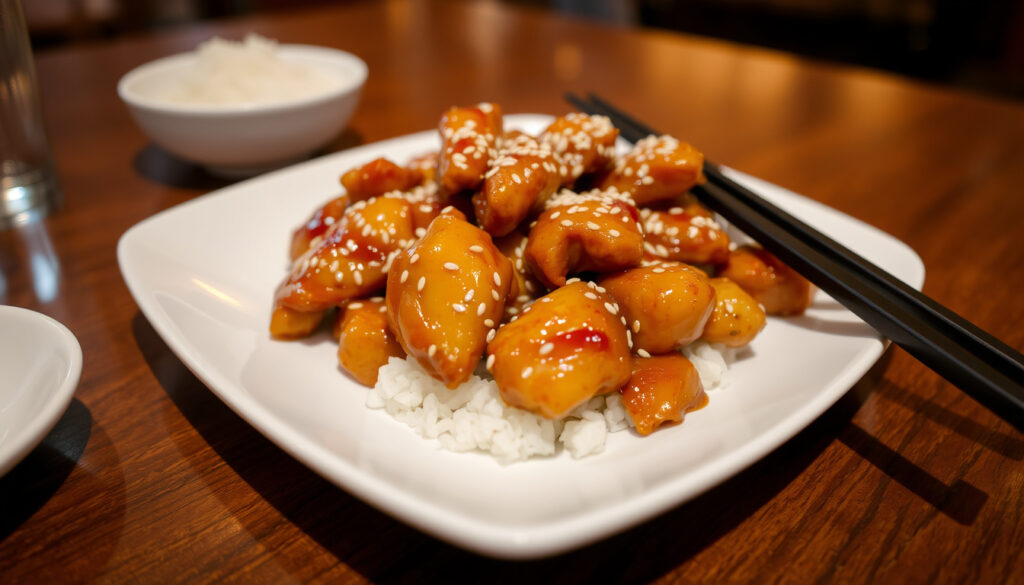
Sesame Chicken Near Me: What It Is, Nutrition, and Where to Order
There’s something about that glossy, sweet‑and‑savory chicken that makes it the go‑to order when you’re too tired to cook. But behind the crispy coating and sesame seeds lies a dish with a surprisingly high calorie count and a story that blends American convenience with Chinese culinary tradition.
Average calories per serving (Chinese takeout sesame chicken): 400–500 kcal ·
Typical sodium content per serving: 800–1200 mg ·
Protein per serving: 20–30 g ·
Sugar content per serving (from sauce): 15–25 g ·
Number of U.S. Chinese restaurants serving sesame chicken: over 40,000
Quick snapshot
- Sesame chicken is an American Chinese dish (FoodStruct nutrition database).
- It is high in calories, sodium, and sugar (Nutrifox restaurant nutrition tracker).
- The name derives from sesame seeds and sesame oil (FoodStruct nutrition database).
- Exact date of invention is not recorded (Medindia health data publisher).
- Regional variations in sauce recipe are undocumented (Prospre nutrition app).
- Likely originated in the 1970s in American Chinese restaurants, but no exact date found (FoodStruct nutrition database).
- More restaurants are offering baked or air‑fried versions to cater to health‑conscious customers (Carb Manager diet tracking platform).
Five key facts, one pattern: sesame chicken is a delicious but nutritionally dense dish that demands an informed order.
| Fact | Details |
|---|---|
| Origin | American Chinese cuisine, likely 1970s |
| Main protein | Chicken (breast or thigh) |
| Cooking method | Deep-fried, then tossed in sauce |
| Distinctive garnish | Toasted sesame seeds |
| Average price per serving (U.S.) | $8–$14 |
What is sesame chicken made of?
Main ingredients used in sesame chicken
- Chicken (breast or thigh), cut into bite‑sized pieces.
- Cornstarch batter for a crispy coating.
- Soy sauce, sugar, vinegar, and sesame oil for the sauce.
- Toasted sesame seeds for garnish.
According to nutrition data from FoodStruct nutrition database, a 100‑gram portion contains about 293 calories, 14 g fat, 26 g net carbs, and 14 g protein. The sauce drives most of the sugar: 16 g per 100 g. The dish is essentially deep‑fried chicken coated in a thickened sweet‑soy glaze.
How sesame chicken sauce is prepared
- Base: soy sauce, rice vinegar, and brown sugar or honey.
- Aromatics: garlic, ginger, and sometimes chili flakes.
- Thickener: cornstarch slurry.
- Finish: toasted sesame oil and whole sesame seeds.
The sauce is what gives sesame chicken its signature balance of sweet and savory. A typical restaurant order (547 g) delivers around 1,603 calories, according to Nutrifox restaurant nutrition tracker — more than two‑thirds of a daily 2,000‑calorie diet.
Why do they call it sesame chicken?
Historical origins of the name
- The name directly references the two key sesame elements: sesame oil in the sauce and toasted sesame seeds on top.
- The dish is an American Chinese creation, not a traditional Chinese recipe.
As Medindia health data publisher notes, the dish emerged in U.S. Chinese restaurants adapting local tastes. The inclusion of sesame — a common ingredient in both Chinese and Western cooking — made the name instantly recognizable.
Role of sesame seeds and oil in the dish
- Sesame oil adds a nutty aroma to the sauce.
- Sesame seeds provide texture and visual appeal.
The name serves a practical purpose: it distinguishes the dish from similar items like General Tso’s chicken. General Tso’s is spicier and uses a darker sauce; sesame chicken leans sweeter and sesame‑forward, consistent with reports from Prospre nutrition app.
Is sesame chicken healthy?
Calorie and fat content
- A single restaurant order (547 g) can exceed 1,600 calories and 78 g fat (Nutrifox restaurant nutrition tracker).
- Even a smaller cup (142 g) provides 240 calories and 11 g fat (Prospre nutrition app).
For context, that 1,600‑calorie order is equivalent to eating two Big Macs. The deep‑frying process alone adds significant oil absorption.
Sodium and sugar concerns
- Typical sodium per serving: 800–1,200 mg (over half the daily recommended limit).
- Sugar from sauce: 15–25 g per serving — about 4–6 teaspoons.
Data from Eat This Much nutrition tracking site shows that PF Chang’s Home Menu version contains 980 mg sodium per 312 g serving. Restaurant versions are likely even saltier.
Comparison with other Chinese dishes
- Sesame chicken: ~293 kcal/100 g, high sugar and fat.
- Steamed dumplings: ~180 kcal/100 g, lower fat.
- Stir‑fried broccoli in garlic sauce: ~90 kcal/100 g.
According to Carb Manager diet tracking platform, ordering sesame chicken without rice reduces calories to about 293 per serving, but it remains a calorie‑dense choice. A dietitian’s perspective, as shared on Gina’s Skinnytaste social media recipe account, warns that takeout portions can easily exceed 1,500 calories.
That crispy, sweet sesame chicken is a pleasure bomb — but it’s also a sodium and sugar bomb. For anyone watching their heart health or waistline, a half‑portion without rice is the smarter pick.
What is another name for sesame chicken?
Regional variations of the dish
- Sometimes called “crispy sesame chicken” on menus to emphasize the texture.
- In some regions, it’s listed as “sesame seed chicken” or simply “sesame chicken.”
No universal alternative name exists, but the “crispy” variant is common on delivery platforms. Prospre nutrition app notes that the dish’s identity is consistent across most U.S. Chinese restaurants.
Similar American Chinese dishes
- General Tso’s chicken: spicier, darker sauce, no sesame emphasis.
- Sweet and sour chicken: brighter red sauce, pineapple chunks.
- Orange chicken: citrus‑forward sauce, also deep‑fried.
The key difference: sesame chicken’s sauce is sweet and mild, while General Tso’s packs heat. Both dishes, as FoodStruct nutrition database indicates, are nutritionally similar — high in calories and sugar.
How to find the best sesame chicken near me
Using delivery platforms (DoorDash, Grubhub)
- Filter by rating (4 stars or higher).
- Check photos of the dish to see sauce consistency and sesame seed coverage.
- Read recent reviews mentioning “crispy” or “fresh.”
Major delivery services list sesame chicken options with user ratings. According to Gina’s Skinnytaste recipe and food blog, asking for sauce on the side is a simple way to control calories.
Reading Yelp reviews
- Search for “sesame chicken” within Yelp reviews of local Chinese restaurants.
- Look for reviews that mention portion size, crispiness, and sweetness level.
Yelp and Reddit threads provide real user recommendations. A common tip: avoid places that describe their sesame chicken as “soggy” — a sign of poor preparation.
Checking local Chinese restaurant menus
- Call ahead to ask if they use dark or white meat — white meat is leaner.
- Ask if they can prepare it with less sauce or bake instead of fry.
Many local restaurants are happy to customize. The PF Chang’s Home Menu version, for example, offers a frozen option with 400 calories and 21 g protein per 312 g serving (Eat This Much nutrition tracking site).
Delivery photos can be misleading. A dish that looks glossy and thick‑sauced usually means more sugar. Opt for places that show a lighter glaze.
Seven nutritional specs, one pattern: sesame chicken is consistently high in calories, fat, and sodium across all reported serving sizes.
| Nutrient | Per 100 g | Per restaurant order (547 g) | Per homemade lighter version |
|---|---|---|---|
| Calories | 293 kcal | 1,603 kcal | ~500 kcal |
| Total fat | 14 g | 78 g | ~15 g |
| Carbohydrates | 30 g | 147 g | ~40 g |
| Net carbs | 26 g | — | ~30 g |
| Protein | 14 g | 78 g | 45 g |
| Sodium | ~180 mg* | 980 mg (PF Chang’s) | ~600 mg |
| Sugar | 16 g | ~88 g | ~10 g |
*Estimated from average. Sodium per 100 g varies by recipe.
Upsides
- High protein content (20–30 g per serving) supports muscle repair.
- Readily available at over 40,000 U.S. restaurants and via delivery.
- Can be made lighter at home with baked chicken and reduced sugar.
- Mild, sweet flavor appeals to both kids and adults.
Downsides
- Very high in calories (400–500 kcal per takeout serving without rice).
- Excessive sodium (800–1,200 mg) — more than half the daily limit.
- High sugar (15–25 g) from sauce, often from added sucrose.
- Deep‑fried preparation adds trans fats and advanced glycation end‑products.
What we know for sure
- Sesame chicken is an American Chinese dish, not a traditional Chinese recipe.
- The dish is high in calories, sodium, and sugar due to deep frying and sweet sauce.
- The name derives from the prominent use of sesame seeds and sesame oil.
What remains unclear
- The exact date and creator of the dish are not recorded.
- Regional variations in sauce recipe are undocumented and likely vary by restaurant.
“Ordering sesame chicken from take‑out can easily be over 1,500 calories including rice — a lighter version at home can be 513 calories with rice and 44.5 g protein.”
— Gina’s Skinnytaste, recipe blog and social media account
“A restaurant serving of sesame chicken (547 g) contains about 1,603 calories, 78 g fat, and 147 g carbohydrates — more than a full day’s worth of energy for many adults.”
— Nutrifox, restaurant nutrition database
The pattern is consistent: restaurant‑style sesame chicken is a calorie and sodium bomb. For anyone who loves the dish, the smart play is to order a half‑portion, skip the rice, and save the full order for an occasional treat. For those searching “sesame chicken near me,” the best choice is a local restaurant willing to tailor the dish — or a homemade version that delivers the same flavor with a fraction of the guilt. The implication: for the American takeout lover, enjoy sesame chicken as a splurge, or ask for adjustments that keep it from derailing your health goals.
For a deeper look at its origins and variations, check out the story behind this dish to understand how the dish evolved from Chinese-American kitchens to nationwide menus.
Frequently asked questions
Does sesame chicken contain gluten?
Yes, because the batter is typically made with wheat flour or cornstarch that may contain traces, and soy sauce contains wheat. Gluten‑free versions can be made with tamari and rice flour; always ask the restaurant.
Can I make sesame chicken at home?
Absolutely. Healthier recipes use baked or air‑fried chicken, reduced sugar, and low‑sodium soy sauce. The Skinnytaste version, for example, comes in at 513 calories including rice.
What is the difference between sesame chicken and General Tso’s chicken?
Both are deep‑fried American Chinese dishes. General Tso’s has a spicier, darker sauce; sesame chicken is sweeter and uses sesame oil and seeds. Nutritionally they are similar.
How many calories are in a serving of sesame chicken?
A typical takeout order (547 g) contains about 1,600 calories. A smaller cup (142 g) has about 240 calories. Without rice, a standard serving is 293 calories per 100 g.
Is sesame chicken keto-friendly?
No. With 26 g net carbs per 100 g (and up to 147 g per order), it is too high in carbs and sugar for a standard ketogenic diet. Low‑carb alternatives use cauliflower rice and a sugar‑free sauce.
What is the best sesame chicken delivery option near me?
Use DoorDash or Grubhub to filter by rating and read recent reviews. Yelp is good for finding local spots that specialize in crispy, well‑sauced sesame chicken. Always check recent photos.
More related posts
 One Last Ride 2026 Tour Debunked: AI Hoax Explained
 House for Sale Wexford: 2025 Listings & Buyer Guide
 Six Nations Betting Odds 2026: Who Is the Favourite
 My Aviva Ireland Login: Access Your Policy
 JC Exam Timetable 2025: Official Schedule & PDF Download
 Dyson 100 Trade-In at Currys: How to Get £100 Back
 Ireland vs West Indies: History, Results & Key Matches
 How to Sleep Fast in 5 Minutes: Proven Techniques
