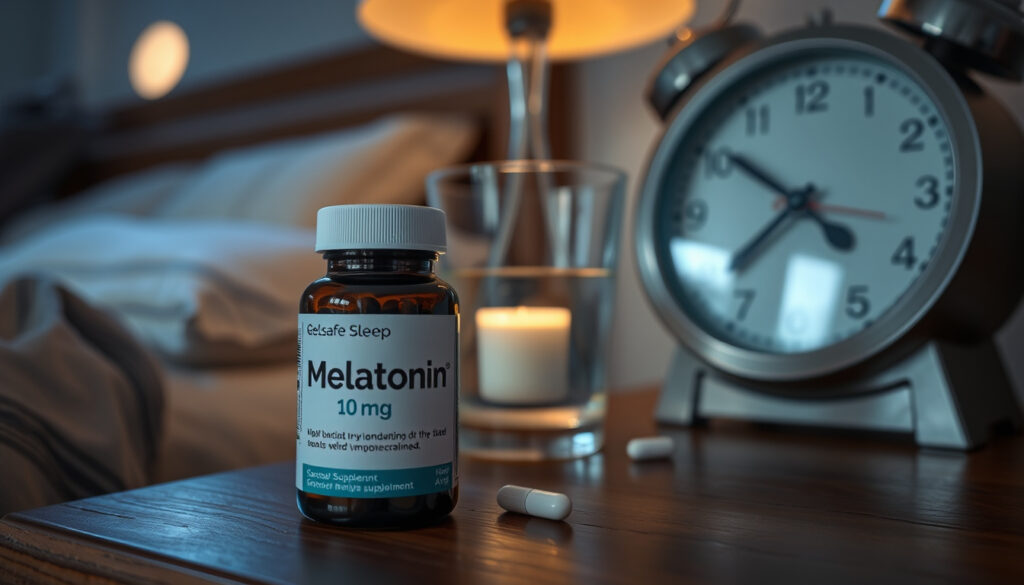
Can I Take 10 mg of Melatonin? Safety Tips
Anyone who has stood in the pharmacy aisle staring at a bottle of 10 mg melatonin tablets has probably wondered the same thing: is this too much? It’s a fair question, especially when the packaging suggests it’s a normal dose.
Maximum daily OTC dose (UK): 10 mg (NHS) ·
Expert-recommended max for adults: 10 mg per night (UC Davis Health) ·
Typical effective dose range: 1–5 mg (Drugs.com) ·
Doses linked to more side effects: above 5 mg (PubMed / Sleep Medicine review)
Quick snapshot
- Melatonin is safe for short-term use (Mayo Clinic)
- NHS maximum adult dose is 10 mg daily (NHS)
- Doses above 5 mg increase side effect risk (PubMed / Sleep Medicine review)
- Long-term safety of nightly 10 mg use is not established (no large RCT)
- Optimal dose varies by age, weight, and metabolism
- Melatonin peaks 30–60 minutes after taking (StatPearls)
- Half-life is 1–2 hours (StatPearls)
- Effects last 4–6 hours (NHS)
- Start with 1–5 mg, only increase if needed
- Consult a healthcare provider before taking 10 mg regularly
Five facts that define the 10 mg melatonin question.
| Fact | Detail |
|---|---|
| Maximum OTC dose (NHS) | 10 mg once daily |
| Expert cap (UC Davis Health) | 10 mg per night |
| Common effective range (Drugs.com) | 1–5 mg |
| Half-life duration (StatPearls) | 1–2 hours |
| Best time to take (NHS) | 30–60 minutes before bedtime |
What happens if I take 10 mg of melatonin a night?
Is it safe to take 10 mg of melatonin every night?
- The NHS (UK health authority) sets the maximum OTC dose at 10 mg once daily (NHS).
- UC Davis Health (academic medical center) recommends adults not exceed 10 mg at a time (UC Davis Health).
- Drugs.com (pharmacy reference) notes that doses over 5 mg are associated with more side effects like headache, next-day drowsiness, and vivid dreams (Drugs.com).
- A systematic review in Sleep Medicine found no better sleep quality at higher doses, only increased risk of drowsiness and dizziness (PubMed / Sleep Medicine review).
Taking 10 mg every night is within the stated safety limits, but the evidence does not support it as a routine choice. The extra milligrammes don’t translate to extra sleep quality.
Most adults who take 10 mg nightly are getting the same sleep benefit as someone on 3 mg, but with a higher chance of waking up groggy or with a headache the next day.
The implication: If you’re taking 10 mg out of habit, it’s worth trying a lower dose for a week and seeing if your sleep actually changes. The side effect profile alone makes the lower dose the smarter bet.
Which is better, 5 mg or 10 mg melatonin?
Is melatonin 10 mg too strong?
- StatPearls (medical reference) reports that effective doses in studies range from 0.1 mg to 10 mg (StatPearls).
- Drugs.com says the optimal safe and effective range is 0.5 mg to 5 mg (Drugs.com).
- UC Davis Health advises that small doses can be effective and that 10 mg is the upper limit, not the target (UC Davis Health).
Is 5 or 10 mg melatonin better?
For most people, 5 mg is the better choice. The systematic review found that doses above 5 mg don’t improve sleep onset or duration, but they do raise the likelihood of side effects (PubMed / Sleep Medicine review). The trade-off is clear: 10 mg offers no extra benefit for a measurable increase in risk.
A person who takes 10 mg instead of 5 mg is essentially paying for more side effects without buying better sleep. The only exception is for individuals with a specific medical need under a doctor’s supervision.
The pattern: Lower doses consistently outperform higher doses in the risk-benefit calculation. Unless a healthcare provider has specifically recommended 10 mg, 5 mg is the safer and equally effective option.
How long does 10 mg melatonin last and when does it kick in?
How long does 10 mg of melatonin take to kick in?
- StatPearls states that melatonin reaches peak blood concentration 30–60 minutes after oral ingestion (StatPearls).
- The NHS advises taking melatonin 30–60 minutes before your planned bedtime (NHS).
How many hours does 10 mg melatonin last?
The hormone’s half-life is 1–2 hours (StatPearls), meaning it is mostly cleared from the body within 4–6 hours. The sleep-promoting effects typically last through the night for most people, though the duration can vary based on individual metabolism and the dose taken.
What this means: Taking 10 mg does not prolong the duration of sleep compared to a lower dose. The extra melatonin is simply metabolised and excreted, leaving you with the same window of effect but a higher chance of residual drowsiness in the morning.
How much melatonin is too much for sleep?
What will happen if I take 20 mg of melatonin?
- Drugs.com warns that doses over 8 mg are not recommended because they make side effects more likely (Drugs.com).
- Mayo Clinic lists headache, dizziness, nausea, and daytime drowsiness as common side effects at any dose, but more pronounced at higher doses (Mayo Clinic).
- StatPearls describes melatonin as relatively nontoxic, but mild adverse effects increase with dose and extended-release formulations (StatPearls).
Melatonin overdose: what you should know
Taking 20 mg is considered an overdose. While melatonin is not lethal in such amounts, the side effects can be severe: confusion, nausea, vomiting, dizziness, irritability, and next-day grogginess (UC Davis Health). The NHS maximum of 10 mg exists for a reason – exceeding it puts you in territory where the risks outweigh any potential benefit.
Accidentally taking 20 mg is more common than you’d think, especially when people assume a higher dose will work faster. The reality is that 20 mg can leave you feeling hungover, disoriented, and unable to function the next day – all for no extra sleep benefit.
The catch: More melatonin does not mean more sleep. Once you exceed the body’s natural saturation point, the excess hormone simply circulates and causes side effects. The safe ceiling is 10 mg, and for most people, the effective dose is far lower.
Pros and cons of taking 10 mg melatonin
Upsides
- Within the safe upper limit established by the NHS and UC Davis Health
- Available over the counter in most countries
- May be helpful for short-term sleep issues under medical guidance
Downsides
- Higher risk of headache, nausea, and daytime drowsiness compared to lower doses
- No proven improvement in sleep quality over 5 mg
- Long-term nightly use lacks safety data
- Can cause confusion, irritability, and vivid nightmares at higher doses
How to take melatonin safely: a step-by-step guide
- Start with the lowest effective dose. Begin with 1–3 mg, taken 30–60 minutes before bed (Drugs.com).
- Wait one week before increasing. If 1–3 mg doesn’t help, try 5 mg. Do not jump to 10 mg without testing lower doses first.
- Take it at the same time each night. Consistency helps regulate your circadian rhythm.
- Avoid alcohol and caffeine. Both can interfere with melatonin’s effectiveness and increase side effects.
- Use it short-term only. The NHS recommends melatonin for up to 13 weeks for sleep disorders. Long-term use should be supervised by a doctor (NHS).
- Consult a healthcare provider if you have liver disease, autoimmune conditions, or take other medications (especially blood thinners or immunosuppressants).
What we know and what remains unclear
Confirmed facts
- 10 mg daily is the NHS maximum
- Doses above 5 mg increase side effect probability (PubMed / Sleep Medicine review)
- Melatonin peak occurs 60 minutes after ingestion (StatPearls)
- Effects last 4–6 hours (NHS)
What’s unclear
- Whether 10 mg every night is safe long-term (no large RCT)
- Individual optimal dose varies by age, weight, and metabolism
“The maximum dose is 5 tablets (10 mg) once daily.”
— NHS (UK health authority) guidance
“Adults should not take more than 10 mg at a time. Small doses can be effective.”
— UC Davis Health (academic medical center)
“Experts recommend taking no more than 10 milligrams of melatonin at a time.”
— Sleep Foundation (nonprofit sleep research organization)
“Doses over 8 mg aren’t recommended, as they can make side effects more likely.”
— GoodRx (drug pricing and health information platform)
For anyone considering a nightly 10 mg melatonin habit, the choice is clear: start lower, monitor how you feel, and only increase if needed. The data consistently shows that less is often more, and the side effects of going too high can outweigh the benefits.
pmc.ncbi.nlm.nih.gov, mayoclinic.org, mayoclinic.org, healthline.com, medicines.necsu.nhs.uk, medicalnewstoday.com
Frequently asked questions
Can I take 10 mg of melatonin if I have never taken it before?
No. Start with 1–5 mg to see how your body responds. Jumping straight to 10 mg increases the risk of side effects like headache and next-day drowsiness.
What should I do if I accidentally took 20 mg of melatonin?
Stay calm and drink water. The symptoms usually pass within a few hours. If you experience severe confusion, vomiting, or difficulty breathing, seek medical help. Most people recover without treatment.
Does 10 mg melatonin make you sleep longer?
Not compared to 5 mg. The duration of sleep effect is similar regardless of dose after a certain threshold. Higher doses only increase side effects, not sleep duration.
Is it better to take 5 mg or 10 mg of melatonin for jet lag?
5 mg is usually sufficient. The Jet Lag Policy Statement from the American Academy of Sleep Medicine suggests 0.5–5 mg taken at the target bedtime. Higher doses are not necessary.
Can 10 mg melatonin cause nightmares?
Yes. Mayo Clinic lists vivid dreams or nightmares as a less common side effect of melatonin, especially at higher doses.
Should I take melatonin every night or only occasionally?
Occasional use is safer. Long-term nightly use has not been studied in large trials. If you need it nightly, discuss with a doctor to rule out underlying sleep disorders.
Does melatonin dosage depend on body weight?
Research has not established a weight-based dosing guideline. StatPearls notes that doses studied range from 0.1 mg to 10 mg regardless of weight, but individuals with higher body mass may metabolise it differently.
Related reading
More related posts
 Wexford Bus to Dublin: Timetable, Prices & Route 740 Guide
 Second Class Honours Grade 1: Meaning, GPA, and FAQs
 House for Sale Wexford: 2025 Listings & Buyer Guide
 Weather in My Location: Current Conditions & 10-Day Forecast
 Overactive Thyroid Symptoms in Females: Early Signs
 Unusual Irish Girl Names: Rarest, Prettiest & Vintage
 My Aviva Ireland Login: Access Your Policy
 Time Change October 2025: Do Clocks Go Forward or Back
