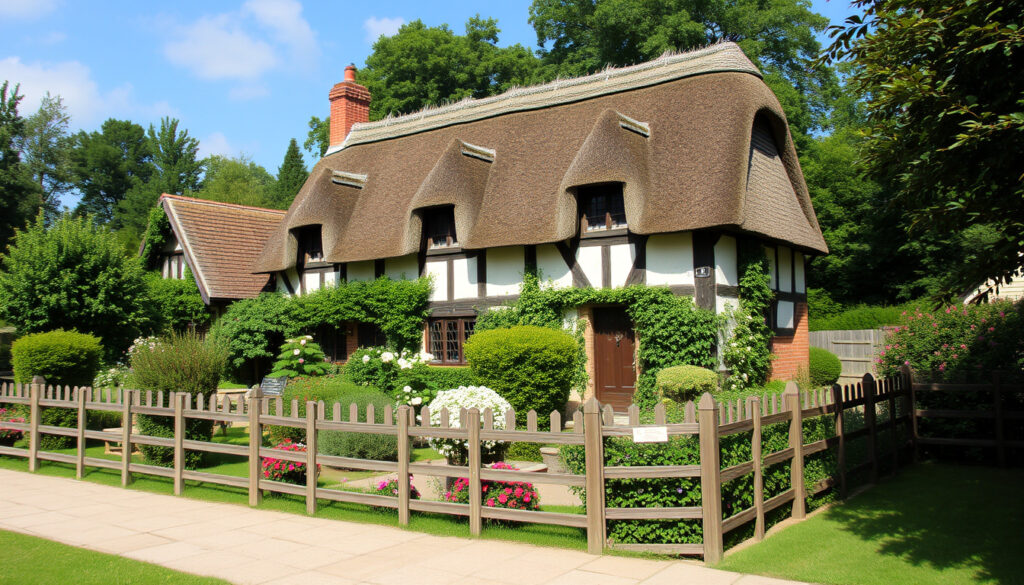
Anne Hathaway (Wife of Shakespeare): Biography, Age, Children
If you’ve ever wondered about the woman who shared William Shakespeare’s life, you’re not alone. Anne Hathaway, the playwright’s wife, has been a figure of curiosity and speculation for centuries. Recent archival discoveries are painting a fuller picture of her life—one that challenges the old “neglected wife” narrative and reveals a resilient woman who managed a household, raised three children, and outlived her famous husband.
Born: c. 1556, Shottery, England ·
Married: 1582 (aged ~26) ·
Husband’s age at marriage: 18 ·
Children: Susanna (1583), Hamnet & Judith (1585) ·
Died: 1623 (aged ~67)
Quick snapshot
- Married Shakespeare in November 1582 (Shakespeare Birthplace Trust)
- Mother of Susanna, Hamnet, Judith (Encyclopaedia Britannica)
- Buried in Holy Trinity Church chancel (Folger Shakespeare Library)
- Exact date of her birth (c. 1556 is best estimate) (Encyclopaedia Britannica)
- Whether she could read or write (no surviving documents) (Encyclopaedia Britannica)
- Nature of her relationship with Shakespeare during his London years (Encyclopaedia Britannica)
- Married 1582 → pregnant with Susanna by May 1583 (Shakespeare Birthplace Trust)
- Hamnet dies 1596 → Shakespeare buys New Place (Shakespeare Birthplace Trust)
- Shakespeare dies 1616 → Anne inherits “second best bed” (Folger Shakespeare Library)
- Ongoing research into Stratford parish records
- 2025 BBC report suggests a happier marriage than long assumed
- Digital archives may reveal more about her daily life
Eight key facts, one pattern: Anne Hathaway’s life is documented primarily through legal and church records, not personal letters—but those records tell a surprisingly consistent story.
| Label | Value |
|---|---|
| Full name | Anne Hathaway |
| Birth | c. 1556 |
| Birthplace | Shottery, Warwickshire, England |
| Marriage date | November 1582 |
| Spouse | William Shakespeare (m. 1582–1616) |
| Children | Susanna (1583–1649), Hamnet (1585–1596), Judith (1585–1662) |
| Death | 6 August 1623 |
| Burial | Chancel of Holy Trinity Church, Stratford-upon-Avon |
Who Was Anne Hathaway, Shakespeare’s Wife?
Her birth and family background
- Anne Hathaway was born around 1556 in Shottery, a hamlet near Stratford-upon-Avon (Encyclopaedia Britannica).
- Her father, Richard Hathaway, was a yeoman farmer who left a modest estate when he died in 1581 (Shakespeare Birthplace Trust).
- Some documentary records refer to her as “Agnes Hathaway,” though the name Anne is more commonly used (Wikipedia).
How she met William Shakespeare
- The exact circumstances of their meeting are unknown, but they likely knew each other through the small Stratford community.
- By late 1582, Anne was pregnant with Shakespeare’s child, prompting a rapid marriage (Shakespeare Birthplace Trust).
Anne was not a passive bystander in Shakespeare’s life. She was a farmer’s daughter who, at 26, married an 18-year-old with a promising future—and then raised their children largely on her own while he built his career in London.
Why Did Shakespeare and Hathaway Split Up?
The ‘second best bed’ bequest
- Shakespeare’s will famously left Anne his “second best bed” (Shakespeare Birthplace Trust).
- This bequest has been interpreted as a slight, but legal experts note that the “best bed” was typically reserved for guests, while the “second best” was the marital bed (Folger Shakespeare Library).
Modern research on their relationship
- A 2025 BBC News article reported on a newly discovered letter suggesting Shakespeare did not abandon his family, but rather maintained a supportive relationship with Anne from London.
- Scholars like Samuel Schoenbaum have pointed out that the age difference and pregnancy-marriage narrative may have been less scandalous in the 16th century than it appears today.
The “second best bed” story is a classic case of a single document being overinterpreted. Without personal letters, we’ll never know the full emotional truth of their marriage.
What Was the Age Difference Between Shakespeare and His Wife?
Newly discovered marriage bond details
- Anne Hathaway was about 26; William Shakespeare was 18 when they married (Shakespeare Birthplace Trust).
- The marriage bond, issued in November 1582, required only one reading of the banns instead of the usual three, indicating haste (Encyclopaedia Britannica).
Pregnancy as a factor in the marriage
- Anne was already pregnant with Susanna when they wed. Susanna was baptized on 26 May 1583 (Folger Shakespeare Library).
- This eight-year age gap—where the woman was older—was unusual but not unheard of in Elizabethan England.
The marriage was a practical arrangement driven by pregnancy, but it lasted 34 years until Shakespeare’s death. That longevity suggests a stable, if not affectionate, partnership.
Is Anne Hathaway (Actress) a Descendant of Shakespeare’s Wife?
No familial connection
- There is no genealogical link between actress Anne Hathaway and the historical Anne Hathaway (Wikipedia).
- The actress was named after the historical figure, but her family tree does not trace back to Shakespeare’s wife.
Shared name coincidence
- This is a common misconception fueled by the famous name.
The actress Anne Hathaway’s fame has revived interest in the historical Anne Hathaway, but it has also created a layer of confusion that obscures the real woman’s story.
What Happened to Shakespeare’s Children and Grandchildren?
Hamnet’s death in 1596
- Hamnet Shakespeare died at age 11 in August 1596 (Folger Shakespeare Library).
- His death likely influenced Shakespeare’s later works, particularly the themes of loss in Hamlet.
Susanna’s marriage to Dr. John Hall
- Susanna married Dr. John Hall, a respected physician, in 1607. They had one daughter, Elizabeth (Encyclopaedia Britannica).
Judith’s later life
- Judith married Thomas Quiney in 1616, just weeks before her father’s death. They had three sons, all of whom died young without heirs.
- Shakespeare’s direct bloodline ended with the death of his granddaughter Elizabeth Hall in 1670 (Shakespeare Birthplace Trust).
Anne outlived her son and two of her grandsons. The loss of the male line meant that Shakespeare’s estate passed through female descendants, a fragile legacy in a male-dominated society.
What Is Anne Hathaway’s Syndrome?
Misattribution of the term
- “Anne Hathaway’s syndrome” is not a recognized medical condition. It is a folk label for being overshadowed by a famous spouse.
- The term appears in pop culture but has no scientific basis.
No clinical condition named after her
- Unlike eponymous syndromes such as Down syndrome or Parkinson’s disease, there is no clinical entity named after Anne Hathaway.
The phrase “Anne Hathaway’s syndrome” is a modern invention that trivializes her actual historical experience. It’s a reminder that historical figures often get reduced to caricatures.
Timeline
- c. 1556 – Anne Hathaway born in Shottery
- November 1582 – Marries William Shakespeare (Shakespeare Birthplace Trust)
- May 1583 – Birth of daughter Susanna (Folger Shakespeare Library)
- February 1585 – Birth of twins Hamnet and Judith (Encyclopaedia Britannica)
- 1596 – Son Hamnet dies at age 11
- 1607 – Daughter Susanna marries Dr. John Hall
- 1616 – William Shakespeare dies; bequeaths Anne his “second best bed” (Shakespeare Birthplace Trust)
- 1623 – Anne Hathaway dies at age ~67 (Encyclopaedia Britannica)
Clarity: Confirmed vs. Unclear
Confirmed facts
- Married William Shakespeare in 1582 (Shakespeare Birthplace Trust)
- She was 26 and he was 18 at marriage (Shakespeare Birthplace Trust)
- She was pregnant at the time of marriage (Shakespeare Birthplace Trust)
- She was buried in Holy Trinity Church chancel (Folger Shakespeare Library)
- Shakespeare left her his “second best bed” in his will (Shakespeare Birthplace Trust)
What’s unclear
- Exact date of her birth
- Location of her childhood home
- Nature of her relationship with Shakespeare (some debate over abandonment)
- Whether she could read or write
- Details of her daily life during Shakespeare’s London career
Expert Perspectives
“The marriage of William Shakespeare and Anne Hathaway was a typical Elizabethan marriage of utility, but the ‘second best bed’ bequest has been misunderstood. It was likely a sentimental gesture, not an insult.”
Samuel Schoenbaum, Shakespeare scholar
“Recent documentary discoveries suggest that Shakespeare did not abandon his wife. A 2025 BBC report highlights a letter indicating that he maintained his family ties in Stratford while working in London.”
BBC News, 2025 article
Summary
Anne Hathaway was not merely “Shakespeare’s wife”—she was a survivor who managed the family estate, outlived three of her children, and secured a place in history that extends beyond her husband’s shadow. For anyone researching the Bard’s family life, the implication is clear: the real Anne Hathaway was more resilient and central to Shakespeare’s story than the neglected-wife trope allows. To reduce her to a footnote is to miss half the story.
yahoo.com, study.com, instagram.com, biography.com, agecrofthall.org, youtube.com, youtube.com
Frequently asked questions
Did Shakespeare leave Anne Hathaway his money?
Shakespeare’s will left his estate to his daughter Susanna and her husband, with a life interest for Anne. She received the “second best bed” and the use of their home, New Place, but not outright ownership of the property.
Was Anne Hathaway the model for any of Shakespeare’s characters?
There is no direct evidence that Anne inspired specific characters, though some scholars have speculated that the strong, witty women in plays like Much Ado About Nothing or The Taming of the Shrew may have drawn on her personality.
How did Anne Hathaway sign her name?
No signed document by Anne Hathaway survives. Most Elizabethan women of her class signed with a mark, and it’s likely she did the same.
Did Anne Hathaway remarry after Shakespeare died?
No. Anne remained a widow for the seven years between Shakespeare’s death and her own in 1623.
Why is Anne Hathaway buried in the church chancel?
Burial in the chancel of Holy Trinity Church was a privilege reserved for the wealthy and prominent. It indicates that Anne was respected in the community and that the Shakespeare family had sufficient status to secure that honor.
What happened to Anne Hathaway’s house?
The Hathaway family home, known as Anne Hathaway’s Cottage, still stands in Shottery and is now a museum operated by the Shakespeare Birthplace Trust.
Related reading
- How Old Is Rory McIlroy? Age, Wife, Children, Net Worth & More – A biographical deep dive into a modern public figure.
- Sterling K. Brown: Biography, Ethnicity, Awards, and Personal Life – Another biographical profile that explores personal and professional life.
More related posts
 Sunderland AFC vs Leeds United Standings – Head-to-Head Record and Form Guide
 State Pension Ireland 2025: Rates, Eligibility & Changes
 Commercial Property for Sale in Dublin: Guide & Key Areas
 Leaning Tower of Pisa: Facts, History & Visiting Guide
 Benefits of Chia Seeds: Nutrition, Dosage, and Risks
 Houses for Sale in Cahir: 2025 Listings & Agents Guide
 Ireland vs France Tickets 2026: Buy, Prices & Guide
 Everton vs Crystal Palace: Head-to-Head Stats & Prediction
