Commercial Property for Sale in Dublin: Guide & Key Areas
Looking for a commercial property in Dublin can feel like navigating two very different markets at once. The city centre competes for premium office and retail space, while suburban postcodes offer industrial units and development land at a fraction of the cost. This guide breaks down the options by area, helps you decide between renting and buying, and walks through the purchase process step by step.
Active listings on Daft.ie: 472 · Active listings on Myhome.ie: 442 · Common property types: Office, Retail, Industrial, Land
Quick snapshot
- Hundreds of commercial properties listed across multiple portals (Daft.ie).
- Property types include office, retail, industrial, and land (Knight Frank Ireland).
- City centre commands premium prices due to foot traffic and transport access (CBRE Ireland).
- Average price per square foot – no public aggregate data.
- Future market direction depends on economic conditions.
- Exact number of small or cheap properties varies by definition.
- No major upcoming regulatory changes reported; market continues with standard buying processes.
- Interest rate environment remains a factor for financing decisions.
- Buyers should monitor portals for new listings and price adjustments.
- Professional advice from solicitors and surveyors is essential before committing.
| Aspect | Detail |
|---|---|
| Active listings on Daft.ie | 472 |
| Active listings on Myhome.ie | 442 |
| Primary property types | Office, Retail, Industrial, Land |
| Most expensive areas (Dublin 4, 2, 6) | €7,500–€13,000 per m² (according to Investropa) |
| Most affordable areas (Dublin 10, 11, 22) | €3,500–€5,500 per m² (according to Investropa) |
| Typical buyers | Owner‑occupiers, investors, developers |
| Key portals | Daft.ie, MyHome.ie, CBRE Ireland, Lisney |
| Legal requirements | Solicitor, surveyor, commercial mortgage, due diligence |
What commercial properties are for sale in Dublin City Centre?
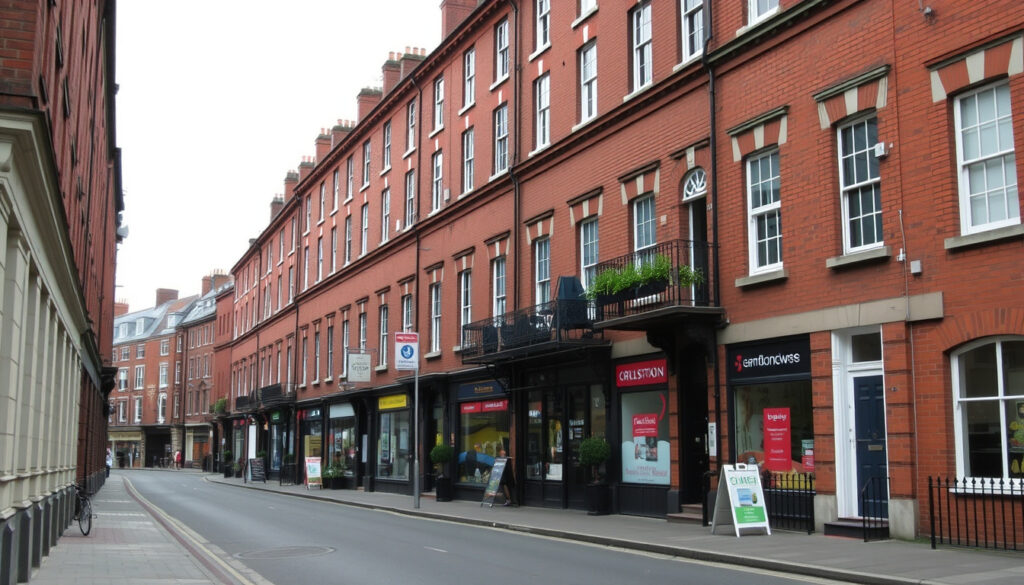
Dublin’s city centre – postcodes Dublin 1, Dublin 2, Dublin 4 and parts of Dublin 8 – is the island’s most expensive commercial real estate market. According to Knight Frank Ireland (international property consultancy), the portfolio includes offices, development land, investment property, retail, and industrial assets. City centre sites are prized for visibility, footfall, and transport links.
What types of properties dominate Dublin City Centre?
- Retail units on high streets and in shopping centres – ground‑floor shops, cafes, and restaurants.
- Office spaces – from multi‑storey headquarters to serviced offices.
- Hospitality properties – hotels, pubs, and guesthouses.
- Development land – scarce and very expensive.
Investropa (European property investment analysis platform) reports that Ballsbridge and Donnybrook (Dublin 4), Grand Canal Dock (Dublin 2), and Ranelagh (Dublin 6) are the most expensive areas, with prices ranging from about €7,500 to over €13,000 per square meter as of early 2026.
What is the price range for commercial property in the city centre?
Exact prices depend on square footage and condition, but you can expect to pay a premium for any asset within the canals. A small retail unit could start around €300,000–€500,000, while larger office buildings easily exceed €2 million. The pattern is clear: the city centre suits businesses that need high visibility and can afford the entry cost.
The implication: if your business model relies on walk‑in customers or a prestige address, city centre property is hard to beat – but the price tag means you’re competing with institutional investors and multinationals.
A retail buyer looking at a 100 m² unit in Dublin 2 could pay €1 million or more. For that sum, you could buy a 500 m² industrial unit in Dublin 12. The trade‑off is footfall versus space.
What commercial properties are for sale in suburban Dublin areas?
Suburban postcodes like Dublin 12, 15, 22, and 24 offer a different proposition: more space per euro, better parking, and easier access for staff who commute by car. According to CBRE Ireland (global commercial real estate services firm), these locations are generally better suited to occupiers seeking lower entry costs and car‑parking convenience.
What properties are available in Dublin 12?
- Industrial units and warehouses – Dublin 12 is known for manufacturing and distribution.
- Retail parks – large‑format stores with ample parking.
- Prices are typically lower than city centre, often €1,500–€3,000 per m² based on available listings.
What about Dublin 15 and Dublin 24?
- Dublin 15 features modern office parks and retail units in growing suburbs like Blanchardstown.
- Dublin 24 (Tallaght) offers a mix of retail parks and industrial estates, generally more affordable.
- According to Investropa, Ballyfermot (Dublin 10), Finglas (Dublin 11), and Clondalkin (Dublin 22) are among the most affordable areas, with typical prices from about €3,500 to €5,500 per square meter.
The pattern: suburban commercial property gives you space and affordability but may lack the footfall and cachet of central locations. For a logistics firm or a trade counter, the suburbs are ideal. For a boutique retailer, less so.
One pattern across postcodes: the further you go from the city centre, the more square meters your euro buys. Here’s a direct comparison:
| Factor | City Centre (D1, D2, D4) | Suburban (D12, D15, D24) |
|---|---|---|
| Price per m² | €7,500–€13,000 | €3,500–€5,500 |
| Typical property types | Retail, Office, Hospitality | Industrial, Warehouse, Retail park |
| Footfall / visibility | High – attracts walk‑in customers | Low – dependent on car access |
| Parking | Limited, expensive | Ample, often free |
| Best suited for | Shops, restaurants, professional services | Logistics, trade counters, manufacturing |
How to find small or cheap commercial properties for sale in Dublin?
If your budget is tight or you only need a modest footprint – a lock‑up unit, a small office, or a kiosk – you won’t find them easily on the first page of a portal search. Knowing where to look and what counts as “cheap” is half the battle.
Where to search for small commercial properties?
- Use Daft.ie (Ireland’s largest property portal) with filters for price under €200,000 and property type “Office” or “Retail”.
- MyHome.ie (major Irish property listing site) also lets you filter by size and price.
- Check CBRE Ireland and Lisney (long‑established Irish real estate agency) for off‑market opportunities.
- Auction sites and local newspapers sometimes list smaller lots that don’t appear on the big portals.
What are the characteristics of cheap commercial properties?
- Location: less central postcodes (Dublin 10, 11, 22, 24) where prices per m² are lowest (Investropa).
- Condition: properties needing renovation or with short leases can be priced below market.
- Size: small lock‑up units or serviced offices under 50 m² often have lower absolute prices.
- Type: secondary retail units or first‑floor offices with no street frontage.
The trade‑off: you may buy a cheaper property in a less proven area, but with the right business plan it can work. As Investropa notes, areas like Stoneybatter, Phibsborough, and Inchicore are showing gentrification and attracting new investor interest.
Cheap often means compromises – limited visibility, older building stock, or a less desirable street. Always budget for renovation and legal due diligence.
Should I rent or buy commercial property in Dublin?
This is the central fork in the road. According to Lisney, owner‑occupiers typically buy when they want control over premises and long‑term occupancy stability. On the other hand, CBRE Ireland notes that businesses rent when they need flexibility, lower upfront capital, or easier relocation.
What are the benefits of renting commercial property in Dublin?
- Lower upfront costs – no deposit beyond a rent deposit and legal fees.
- Flexibility to scale up, down, or relocate as your business changes.
- Maintenance and property management often included in the lease.
- Easier to test a new location before committing to a purchase.
When does buying make sense?
- You have the capital or can secure a commercial mortgage.
- You intend to occupy the property for 5+ years.
- You want to build equity and control the asset.
- Interest rates make borrowing favourable compared to escalating rents.
The decision matrix depends on your business stage, capital position, and growth plans. A start‑up might rent; an established practice or manufacturer should run the numbers on buying.
Renting ties you to a landlord’s timetable and lease terms. Buying locks you in but gives you an asset that can appreciate. The wrong choice can cost tens of thousands in either direction.
Upsides
- Buying: long‑term cost stability, equity building, full control.
- Renting: low entry cost, flexibility, predictable monthly costs.
Downsides
- Buying: large upfront capital, illiquid, responsibility for maintenance.
- Renting: no equity, rent increases, limited ability to alter premises.
What is the process of buying commercial property in Dublin?
Buying commercial property in Ireland is a formal process that typically takes 8–12 weeks from offer to completion. Missing a step can delay the transaction or create legal headaches. Here’s the step‑by‑step.
Step 1: Engage a solicitor
You need a solicitor experienced in commercial property law. This is non‑negotiable – residential conveyancers may not handle the commercial complexities.
Step 2: Commission a surveyor
Before making an offer, a building surveyor inspects the property for structural issues, compliance, and hidden costs. A valuation surveyor also provides a market appraisal.
Step 3: Secure financing
Contact banks or specialist lenders for a commercial mortgage. CBRE Ireland notes that interest rates and loan‑to‑value ratios vary, so shop around. Expect a deposit of 30–40% of the purchase price.
Step 4: Conduct due diligence
- Planning permission – verify existing permissions and any restrictions.
- Environmental checks – contamination, flood risk, etc.
- Searches – title deeds, burdens, and encumbrances.
- Fixtures and fittings – what is included in the sale.
Step 5: Make an offer and sign contracts
Your solicitor submits the offer. Once accepted, a contract of sale is drafted. You pay a deposit (usually 10%) and sign. The contract is legally binding.
Step 6: Complete the purchase
On closing day, the balance is paid, the title is registered with the Property Registration Authority, and you take possession.
Every step requires a professional partner – solicitor, surveyor, accountant, and lender. Skimp on due diligence and you risk buying a property with hidden problems.
Stamp duty on commercial property in Ireland is 7.5% of the purchase price. VAT at 23% may also apply on new builds. Factor these into your budget.
Confirmed facts and what remains unclear
Confirmed facts
- Hundreds of commercial properties are listed for sale in Dublin across multiple portals (Daft.ie, MyHome.ie).
- Dublin City Centre is the most expensive area for commercial property (Investropa).
- Property types include office, retail, industrial, and land (Knight Frank Ireland).
What’s unclear
- Average price per square foot – no public aggregate data exists.
- Future market direction – depends on interest rates, inflation, and business sentiment.
- Exact number of small or cheap properties – definitions vary widely.
- Some properties may be overpriced relative to market conditions (no independent benchmark).
Expert perspectives on Dublin’s commercial market
“Commercial property in Dublin city centre is generally better suited to occupiers seeking visibility, footfall, and access to transport, while suburban locations are more often associated with lower entry cost and car‑parking convenience.”
– CBRE Ireland (global commercial real estate services firm)
“Owner‑occupiers typically buy commercial property when they want control over premises and long‑term occupancy stability.”
– Lisney (long‑established Irish real estate agency)
“Our commercial portfolio includes offices, development land, investment property, retail, and industrial assets – confirming that Dublin commercial transactions are not limited to office stock.”
– Knight Frank Ireland (international property consultancy)
The consensus from professionals is clear: the right decision depends on your business model, capital position, and growth timeline. No single answer fits every buyer.
For a business with stable cash flow and a 7‑year horizon, buying a commercial property in a suburb like Dublin 12 or Dublin 15 can cut occupancy costs and build an asset. For a young company needing flexibility, renting a city‑centre office with a short lease may be wiser. The choice is strategic, not just financial.
While this guide focuses on Dublin, a broader perspective can be gained by exploring commercial properties across Ireland through the 2025 national market overview.
Frequently asked questions
Do I need a commercial mortgage to buy a property in Dublin?
Yes, unless you have ready cash. Commercial mortgages typically require a 30–40% deposit and are offered by Irish banks and specialist lenders. Rates are higher than residential mortgages.
What is the VAT rate on commercial property in Ireland?
VAT on commercial property is 23%. It applies to new builds and may be reclaimable if you are VAT‑registered. Second‑hand properties may be exempt.
Can a non‑resident buy commercial property in Dublin?
Yes, non‑residents can buy commercial property in Ireland without restriction. You will need an Irish solicitor and may face additional tax obligations.
How long does the commercial property buying process typically take?
From offer to completion, expect 8–12 weeks, sometimes longer if surveys reveal issues or financing takes time.
What are the stamp duty rates for commercial property in Ireland?
Stamp duty on commercial property is 7.5% of the purchase price. This is payable on completion and is a significant extra cost.
Is commercial property a good investment in Dublin currently?
It can be, but it depends on location, property type, and your investment horizon. Suburban industrial units and city‑centre retail each have different risk profiles. Consult a financial advisor.
What due diligence checks are recommended before buying?
At minimum: planning permission check, building survey, environmental audit, title search, and finance pre‑approval. Your solicitor will coordinate these.
Related reading: St Stephen’s Green Shopping Centre: Shops, History & Plans · House for Sale Wexford: 2025 Listings & Buyer Guide
More related posts
 Cast of Warfare (2025 Film): Actors, Roles & Director
 Best Empanada de Espinaca Near Me: Top Dublin Spots
 Good Restaurants in Dublin: Best Places to Eat in 2026
 How to Descale a Coffee Maker with Vinegar: Easy Steps
 Who Was Charlie Kirk? Biography, Politics & Death
 Alexander Isak Liverpool Transfer: Record £125m Deal
 Slow Cooker Beef Stroganoff Recipe: Easy & Tender
 Sunderland AFC vs Leeds United Standings – Head-to-Head Record and Form Guide
