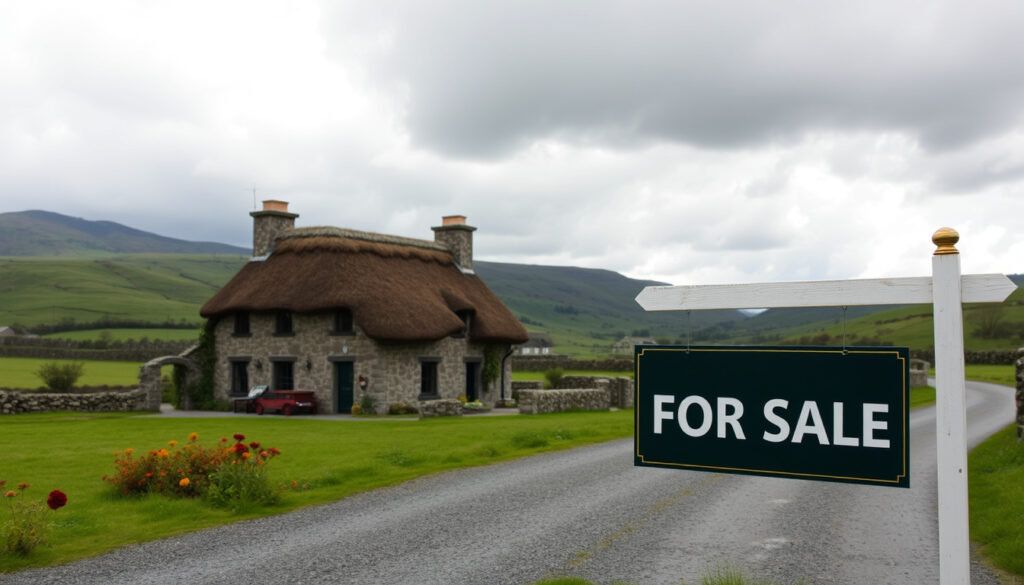
Hotels for Sale Ireland: 2025 Buyer’s Guide
Hotel investment in Ireland hit €340 million in H1 2025 alone, but the path from browsing listings to signing contracts is full of twists. Whether you’re eyeing a luxury country house or a small B&B, understanding the current landscape is your first step.
Hotels listed on Daft.ie: 294 ·
Hotels listed on Myhome.ie: 30 ·
Hotels listed on BusinessesForSale.ie: 8 ·
Total deal value in 2025 (Savills): €589m ·
Average deal size in 2025 (Savills): €7m ·
Number of deals in 2025 (Savills): 83
Quick snapshot
- Hotel investment in H1 2025 totalled €340 million (Fáilte Ireland H1 2025 Transaction Summary)
- Highest price per key was €400,000 at the Fleet Hotel, Dublin (per Fáilte Ireland) (Fáilte Ireland H1 2025 Transaction Summary)
- Dublin has 3,000 hotel bedrooms currently under construction (CBRE Ireland)
- Daft.ie lists 294 hotels for sale (Daft.ie) (Fáilte Ireland H1 2025 Transaction Summary)
- Exact number of abandoned hotels for sale
- Average time on market for hotel listings
- Breakdown of foreign vs. domestic buyers
- 2025 H1: €340m in deals, 48% drop vs H1 2024 (Fáilte Ireland)
- 2024: Post-pandemic recovery, tourism rebounds
- 2020–2023: COVID-19 impact, distressed sales begin
- CBRE predicts 2025 could be a record year with volumes reaching €1.7 billion (CBRE Ireland)
- Several high-profile assets, guide prices exceeding €500 million, are being marketed for 2026 (CBRE Ireland)
- 36% of Dublin’s pipeline is budget/mid-scale (CBRE Ireland)
Buyer insight: The €340 million in H1 2025 deals came from 83 transactions, but Savills reports that the full-year picture shows €589 million across those same 83 deals—meaning average deal size jumped to €7 million. For individual buyers, this signals growing institutional competition at the top end.
Five key metrics that define the Irish hotel market in 2025, drawn from official transaction data and industry reports.
| Metric | Value | Source |
|---|---|---|
| Hotel investment H1 2025 | €340 million | Fáilte Ireland |
| Highest price per key (Dublin) | €400,000 | Fáilte Ireland |
| Highest price H1 2025 | €86 million (Ruby Molly Hotel) | Fáilte Ireland |
| Regional highest price per key | €131,000 (Clayton Whites Hotel, Wexford) | Fáilte Ireland |
| Dublin hotel pipeline | 3,000 bedrooms | CBRE Ireland |
| Typical transaction time | 5–6 months | Crowe Ireland / JLL |
What types of hotels are for sale in Ireland?
Luxury hotels and country houses
- Country houses with acreage, often converted from historic estates
- Price range typically €5 million to €15 million+
- Example: 4-star boutique in Cork, price undisclosed (CBRE Ireland)
The implication: luxury buyers are often institutional investors looking for trophy assets with strong brand potential.
Small budget hotels and B&Bs
- Family-run operations, often with 10–30 rooms
- Price range €200,000 to €800,000
- Listed on Daft.ie and Myhome.ie
The trade-off: lower entry cost but higher operational risk, especially in seasonal locations.
Abandoned or distressed properties
- Occasionally listed on commercial property sites
- Require full renovation, legal checks, and planning permission review
- The catch: lower initial price, but renovation costs can exceed the purchase price
Risk alert: Renovation costs on abandoned hotels can run 1.5 to 3 times the purchase price. Always commission a full structural survey and planning history check before making an offer.
Hotels for sale by owner
- Direct purchase from owner, often on Daft.ie or BusinessesForSale.ie
- Potentially lower commission, but less buyer protection
- Owner listings may lack professional valuation (Crowe Ireland / JLL)
Why this matters: by-owner listings can be a bargain, but they demand extra due diligence from the buyer.
Takeaway for buyers: The Irish hotel market splits into four distinct tiers. Luxury and small B&Bs attract different buyer profiles, while abandoned and by-owner properties offer lower entry prices at the cost of higher risk. Most first-time buyers should target the small-to-mid range where competition is less intense.
How to find hotels for sale by owner in Ireland?
Using online marketplaces and classifieds
- Daft.ie lists 294 hotels as of Q4 2025
- Myhome.ie lists 30 hotels and B&Bs
- BusinessesForSale.ie focuses on commercial businesses, including hotels
Networking with local real estate agents
- Commercial agents like CBRE, Savills, and Crowe often handle off-market listings
- CBRE Ireland currently markets assets like The 1852 Hotel and Seven Oaks Hotel (CBRE Ireland)
Checking regional business listings
- Local newspapers and regional property portals sometimes list smaller hotels
- County-specific buyer groups on social media can surface by-owner deals
The pattern: online aggregators dominate, but off-market deals through agents often yield better terms.
What is the average price of hotels for sale in Ireland?
Price ranges for different types
- Small B&Bs: €200,000–€800,000
- Mid-market hotels: €800,000–€3 million
- Luxury country houses: €5 million–€15 million+
- Average deal size in 2025 H1 was €4.1 million (calculated from €340m / 83 deals) (Fáilte Ireland)
Factors affecting price: location, condition, size
- Dublin properties command a premium; highest price per key reached €400,000 (Fáilte Ireland)
- Regional hotels like Clayton Whites in Wexford sold for €21 million with a per-key price of €131,000 (Fáilte Ireland)
- Condition and planning permissions significantly affect valuation
The trade-off: Dublin offers higher revenue per room but at a much higher acquisition cost. Regional hotels provide better yield on capital.
For context on Dublin commercial real estate, see our Commercial Property for Sale in Dublin: Guide & Key Areas.
Are there abandoned hotels for sale in Ireland?
Where to find abandoned hotel listings
- Commercial property sites occasionally list distressed properties
- Local auctions and receivership sales are common sources
- No central registry exists; sourcing requires persistent searching (Irish Examiner)
Risks and opportunities of buying abandoned property
- Lower initial purchase price, but significant renovation costs
- Legal checks essential: outstanding debts, planning permissions, structural issues
- Potential for conversion to other uses (e.g., residential, care home) if zoning allows (Crowe Ireland / JLL)
The catch: abandoned hotels are speculative investments. The upside is real, but the downside includes lengthy legal battles and cost overruns.
How to buy a hotel in Ireland?
Step 1: Research and shortlist properties
- Use Daft.ie, Myhome.ie, and BusinessesForSale.ie to identify listings
- Engage a commercial real estate agent (CBRE Ireland)
- Visit properties in person; assess location, condition, and competition
Step 2: Arrange financing and due diligence
- Secure a commercial mortgage or private investment
- Hire a solicitor experienced in Irish commercial property
- Due diligence includes: structural survey, business accounts, planning permissions, environmental checks (Crowe Ireland / JLL)
- Typical transaction time: 5–6 months (Crowe Ireland / JLL)
Step 3: Legal process and closing
- Most hotel deals are structured as corporate or share purchases (Crowe Ireland / JLL)
- Sign contracts, transfer funds, and register the property
- Obtain necessary licenses (liquor, entertainment, etc.)
The implication: the buying process is lengthy but manageable with the right team. Most buyers underestimate the time required for due diligence.
Timeline tip: From initial offer to closing, expect five to six months. Use the first two months for due diligence and financing, then allow three to four months for legal conveyance and licensing.
What first-time buyers need to know: Budget an extra 10–15% of the purchase price for legal fees, stamp duty, and unforeseen repair costs. The most common mistake is skipping a full planning history check—a single unresolved zoning issue can delay closing by six months.
Upsides
- Strong tourism demand supports revenue
- Tax incentives for hotel renovation (e.g., Section 481)
- Capital appreciation potential, especially in Dublin
- Growing market for budget and mid-scale hotels
Downsides
- High competition from institutional buyers
- Regulatory hurdles: planning, licensing, fire safety
- Significant renovation costs for older properties
- Seasonal cash flow fluctuations in regional areas
Timeline: Irish hotel market evolution
- 2025 H1: €340 million in deals, highest price per key €400,000 (Fáilte Ireland)
- 2024: Post-pandemic recovery, tourism rebounds, deal volume increases
- 2020–2023: COVID-19 impact, distressed sales, government supports
Confirmed facts vs. what remains unclear
Confirmed facts
- Fáilte Ireland reported 83 deals totalling €340 million in H1 2025 (Fáilte Ireland)
- Daft.ie lists 294 hotels for sale
- Myhome.ie lists 30 hotels and B&Bs
- Highest price per key was €400,000 at the Fleet Hotel, Dublin (Fáilte Ireland)
What’s unclear
- Exact number of abandoned hotels for sale
- Average time on market for hotel listings
- Breakdown of foreign vs. domestic buyers
- Future impact of inflation on hotel operational costs
Market perspectives
“Deals totalled €589m across 83 deals, resulting in an average size of €7m.”
— Savills investment report, 2025
“Current listings include The 1852 Hotel, Seven Oaks Hotel, and The Maples House Hotel.”
— CBRE Ireland representative
For a first-time buyer, the Irish hotel market offers genuine opportunity, but only if you go in with eyes wide open. The record €340 million in H1 2025 deals shows institutional demand is strong, but smaller buyers can still find value in regional and distressed properties. The trade-off is clear: take the time to do thorough due diligence, or risk paying for a mistake that could take years to unwind.
For Wexford-specific property trends, see our House for Sale Wexford: 2025 Listings & Buyer Guide.
youtube.com, cayugahospitality.com, failteireland.ie, primehospitalityworld.com, hospitalitynet.org, inua.ie, irelands-blue-book.ie, mitchellmcdermott.com
For those interested in broader investment opportunities, our guide to commercial property in Ireland covers additional options beyond the hospitality sector.
Frequently asked questions
Do I need a license to operate a hotel in Ireland?
Yes, you need a hotel license (often called a “hotel registration”) from Fáilte Ireland, plus a liquor license if serving alcohol.
What are the tax implications of buying a hotel in Ireland?
Stamp duty on commercial property is 7.5% of the purchase price. VAT may apply at 23% on new builds, but second-hand properties are usually exempt. Consult a tax advisor.
How long does the purchase process typically take?
Crowe Ireland / JLL report that a typical transaction takes five to six months from initial offer to closing.
Can a foreigner buy a hotel in Ireland?
Yes, there are no restrictions on non-EEA nationals purchasing commercial property. You may need a business visa if you plan to operate the hotel yourself.
What are the ongoing costs of hotel ownership?
Property taxes, insurance, staff wages, utilities, maintenance, and marketing. Annual operating costs can range from 60% to 80% of revenue.
Are there any grants for renovating an old hotel?
Section 481 tax relief for film production does not apply to hotels, but there are local enterprise grants for tourism-related businesses. Check with the Local Enterprise Office.
How do I check if a hotel has planning permission issues?
Search the local authority’s planning register. Your solicitor should conduct a full planning search as part of due diligence.
What is the typical occupancy rate for Irish hotels?
National average occupancy was 75% in 2024, with Dublin averaging 80%+ and regional hotels closer to 70%.
For potential buyers, the choice is straightforward: invest in a Dublin property and chase high per-key revenue, or look regionally for better yield and lower entry costs. First-time buyers who target regional mid-market hotels and commit to full due diligence will find the clearest path to a profitable acquisition in 2025.
More related posts
 UK Visa from Ireland 2025: Step-by-Step for Non-EU
 Countries in South America: Full List of 12 Sovereign States
 Gardaí Christopher Maguire Update: Found Safe & Well
 00447 Phone Country Code: What Is It & Who Is Calling
 Grand Muthu Oura View Beach Club: Location, Reviews, Guide
 Horse Racing Results Yesterday: UK, Ireland Tracks & Replays
 Protect the Dolls Shirt: Meaning, Where to Buy & More
 Nissan Frontier Headlight Recall – What 2024 Owners Need to Know
