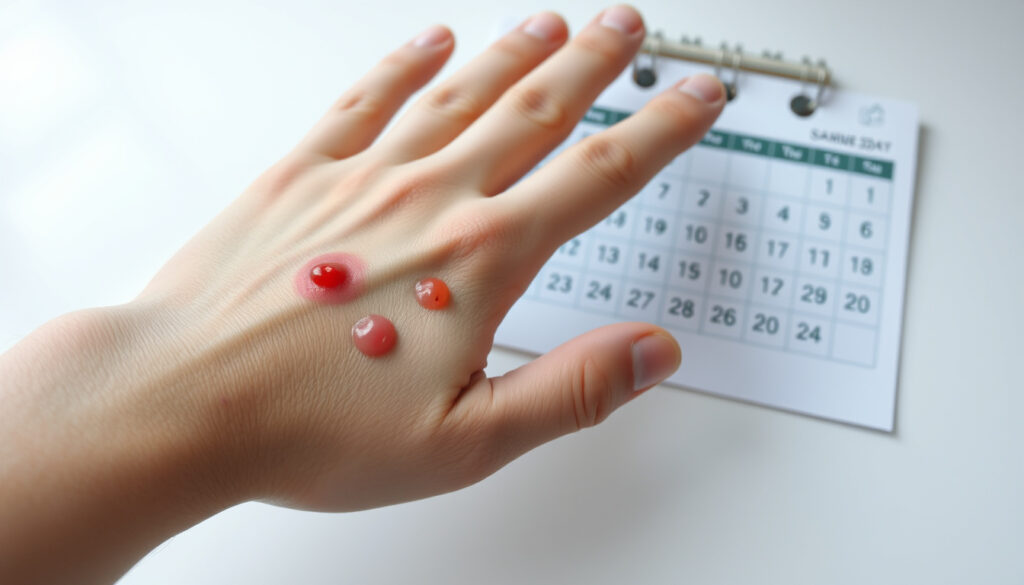
Early Signs Hand, Foot and Mouth Day by Day
Few things unsettle a parent quite like waking up to a hot, fussy toddler with no obvious explanation, and if hand, foot and mouth disease is the culprit, the next few days follow a predictable pattern. Understanding the early signs day by day can turn confusion into a clear game plan.
Average incubation period: 3 to 6 days ·
Duration of illness: 7 to 10 days ·
Most common age group: children under 5 years ·
Primary cause: Coxsackievirus A16 ·
Fever onset: day 1–2 ·
Rash appearance: day 2–3
Quick snapshot
- Incubation period is 3–6 days (NHS (UK health authority))
- First symptoms are fever and sore throat (DC Health (public health department))
- HFMD usually resolves in 7–10 days without specific treatment (Mayo Clinic (academic medical center))
- Adults can catch it but often have milder symptoms (CDC (US public health agency))
- Exact day-by-day progression varies by individual and strain (HealthyChildren.org / AAP (pediatric society))
- Effectiveness of specific home remedies is anecdotal (no large RCTs) (Mayo Clinic (academic medical center))
- Fever on day 1–2, rash/ulcers on day 2–3, symptoms peak day 4–7 (NHS (UK health authority))
- Contagious from a few days before symptoms until blisters crust (CDC (US public health agency))
- Virus may shed in stool for weeks after recovery (CDC (US public health agency))
- Full recovery expected in 7–10 days for most children (NHS (UK health authority))
- Home care focuses on pain relief, hydration, and soft foods (Mayo Clinic (academic medical center))
- Return to school when fever-free for 24 hours without medication (CDC (US public health agency))
The following timeline summarizes the typical progression of HFMD.
| Stage | Timeline | Key features |
|---|---|---|
| Incubation | Day 0–6 | No symptoms; virus multiplying |
| Fever onset | Day 1–2 | Temperature 38–39°C, sore throat, malaise |
| Rash & ulcers | Day 2–3 | Red spots on hands, feet, mouth; painful mouth ulcers |
| Peak symptoms | Day 4–7 | Fever subsides; blisters crust; rash spreads |
| Recovery | Day 7–10 | Rash fades, skin may peel; child feels better |
| Viral shedding | Week 2–3 | Virus still in stool; hand hygiene continues |
Parents face a trade-off: the illness is almost always self-limiting, but the mouth pain can make children reject food and drink for days. The real risk isn’t the virus itself — it’s dehydration during the peak ulcer phase.
What symptoms come first in hand, foot, and mouth?
Before any spots appear, the virus announces itself with signs that could easily be mistaken for a common cold. The pattern is consistent across health authorities.
Fever and sore throat onset
- First symptoms are often fever, sore throat, and reduced appetite (NHS (UK health authority))
- Fever typically appears on day 1 or 2 (DC Health (public health department))
- These early signs may resemble a common cold or flu (Mayo Clinic (academic medical center))
Loss of appetite and general malaise
- Children often first develop a vague viral illness for a couple of days (Cleveland Clinic (health system))
- Reduced appetite is common even before mouth ulcers appear
The implication: if your child has a fever and complains of a sore throat but doesn’t have a runny nose or cough, hand, foot and mouth should be on your radar — especially if they’re under 5.
What does day 1 of HFMD look like?
The day-by-day timeline gives parents a reliable map. While individual variation exists, the sequence of events is well-documented across multiple health systems.
Day 1 signs
- Day 1: fever, sore throat, feeling unwell (NHS (UK health authority))
- Temperature often reaches 38–39°C
- No rash or spots yet — this is the confusing phase
Day 2–3 signs
- Day 2–3: rash on hands/feet, mouth ulcers (NHS (UK health authority))
- Mouth ulcers may develop 1 to 2 days after the fever starts (CDC (US public health agency))
- Red spots on palms, soles, and inside the mouth; can blister
Day 4–7 signs
- Day 4–7: symptoms peak and begin to fade (CDC (US public health agency))
- Fever usually resolves by day 4 or 5
- Ulcers may still be painful; rash crusts over
Recovery signs
- Recovery phase: skin peeling may occur, full recovery in 7–10 days (NHS (UK health authority))
- Peeling on fingers and toes is normal and not contagious
- Energy levels return; appetite picks up
The day 1–2 window is where parents most often mistake HFMD for a generic viral illness. The diagnostic clue arrives on day 2–3 when the first red spots appear. If you see fever followed by spots on the palms or soles 48 hours later, you’ve identified the pattern.
The pattern: once the rash appears, the diagnosis becomes clear, and parents can shift from guessing to supportive care.
For parents: If you see fever followed by spots on palms/soles 48 hours later, you’ve identified HFMD. The first 3 days are the most confusing, but the rash is the key diagnostic clue.
How likely am I to catch hand, foot, and mouth from my child?
Many parents assume they’re immune because they had it as a child. The reality is more complicated: adult infection is common, though symptoms are often milder.
Transmission routes
- HFMD is highly contagious via saliva, fluid from blisters, stool (CDC (US public health agency))
- Transmission can start a few days before symptoms appear (NHS (UK health authority))
- Risk of spreading is highest in the first 5 days after symptoms start (NHS (UK health authority))
Parent susceptibility
- Adults can catch it but often have milder symptoms or no symptoms (CDC (US public health agency))
- More than 50% of adult contacts may seroconvert (CDC (US public health agency))
- Adult symptoms may include just a mild fever or a few spots
Prevention measures
- Frequent handwashing with soap and water (CDC (US public health agency))
- Avoid touching face, especially after diaper changes
- Clean surfaces and shared toys with disinfectant
Adults who had HFMD as children can still catch it again because immunity is strain-specific. The Coxsackievirus A16 strain is most common, but there are others. Past infection doesn’t guarantee future protection.
The implication: parents should take precautions even if they think they are immune, especially during the first few days of the child’s illness.
Can I hug my child with hand, foot, and mouth?
This question comes up constantly in parent forums, and the answer depends on timing and precautions.
When it is safe to hug
- Avoid close contact during fever and active rash (CDC (US public health agency))
- Gentle hugging after fever resolves and rash is crusted may be okay
- Hand hygiene is critical after any contact
Precautionary steps
- Wash hands before and after any contact with the child
- Avoid kissing or touching saliva and blister fluid
- Change clothes and wash hands after hugging if blisters are still present
The trade-off: your child needs comfort during a miserable illness, but close contact during the most contagious phase (first 5 days) increases your risk. A hug with clean hands and a covered rash is low-risk after the fever breaks.
What helps HFMD go away faster?
There’s no cure for hand, foot and mouth disease — treatment is entirely supportive. But the right approach can significantly reduce discomfort and speed up recovery.
- Recognize early signs: Fever and sore throat often precede rash. Early recognition helps you prepare for the ulcer phase.
- Manage fever and pain: Use acetaminophen or ibuprofen according to weight-based dosing.
- Offer cold soft foods: Yogurt, smoothies, ice cream, and mashed potatoes are easier on mouth ulcers.
- Prioritize hydration: Popsicles, cold water, and diluted juice help prevent dehydration.
- Know when to call a doctor: If your child refuses fluids for more than 8 hours, has a fever above 39°C that doesn’t respond, or shows signs of dehydration (dry mouth, no tears, decreased urination).
Pain relief and fever management
- Acetaminophen or ibuprofen for fever/pain (Mayo Clinic (academic medical center))
- Numbing mouth gels (like lidocaine-based products) for ulcer pain
- Avoid aspirin in children due to Reye’s syndrome risk
Hydration and diet
- Cold drinks, soft bland foods, avoid acidic or spicy foods (NHS (UK health authority))
- Recommend cold soft foods: yogurt, smoothies, ice cream, mashed potatoes
- Avoid citrus fruits, tomato sauce, and salty snacks
Home remedies and rest
- No specific antiviral cure; treatment is supportive (Mayo Clinic (academic medical center))
- Offer cool water frequently; try popsicles for hydration
- Rinse mouth with warm salt water (if child is old enough to swish)
The most effective intervention is keeping your child hydrated. Pain from mouth ulcers can make a toddler refuse all fluids for 24–48 hours. If they won’t drink at all, that’s when you call the pediatrician — dehydration is the complication that lands children in the hospital.
Do I need to quarantine if my kid has hand, foot, and mouth?
Quarantine rules vary by region, but the core principle across UK, US, and Australian guidance is consistent: keep the child home while they’re actively contagious.
When to keep child home
- Keep child home while fever is present and rash is active (CDC (US public health agency))
- Australian guidance says people are infectious for as long as the blisters contain fluid (NHMRC (Australian health research agency))
- Royal Children’s Hospital Melbourne says HFMD is contagious for up to a month after symptoms first show, but spreads most easily in the first week (Royal Children’s Hospital Melbourne (pediatric hospital))
Return to school criteria
- Return to school when fever-free for 24 hours without medication (CDC (US public health agency))
- Some schools require rash to be completely dry and crusted
- Check school policy — some require a doctor’s note for return
What this means: the most contagious period is the first week, but viral shedding in stool can continue for weeks, so diligent hand hygiene is needed even after the child feels better.
What food is not good for HFMD?
The right diet can make the difference between a miserable illness and a manageable one. The wrong foods can turn a small discomfort into tears at every meal.
Foods to avoid
- Avoid acidic foods (citrus, tomatoes), spicy foods, salty foods (NHS (UK health authority))
- Avoid hot foods and drinks that irritate mouth ulcers
- Skip crunchy foods (chips, crackers) that scrape the ulcers
Recommended foods
- Cold soft foods: yogurt, smoothies, ice cream, mashed potatoes (Mayo Clinic (academic medical center))
- Room-temperature soups, apple sauce, pudding
- Popsicles and chilled drinks to soothe pain and hydrate
The pattern: the diet strategy is all about minimizing irritation to mouth ulcers while maximizing hydration.
What we know for sure — and what’s still uncertain
Confirmed facts
- Incubation period is 3–6 days (CDC (US public health agency), NHS (UK health authority))
- First symptoms are fever and sore throat (Mayo Clinic (academic medical center))
- HFMD usually resolves in 7–10 days without specific treatment (Mayo Clinic (academic medical center))
- Adults can catch it but often have milder symptoms (CDC (US public health agency))
- Contagious period starts before symptoms appear (NHS (UK health authority))
- Home care focusing on hydration and pain relief is standard (Mayo Clinic (academic medical center))
What’s unclear
- Exact day-by-day progression varies by individual and strain (HealthyChildren.org / AAP (pediatric society))
- Effectiveness of specific home remedies is anecdotal (no large RCTs) (Mayo Clinic (academic medical center))
- Duration of contagiousness after symptoms resolve varies by child (Royal Children’s Hospital Melbourne (pediatric hospital))
- Whether previous infection offers long-term immunity depends on the specific strain (CDC (US public health agency))
The catch: while the core facts are solid, individual variation means parents should watch their child’s specific pattern and consult a doctor if concerned.
“People with hand, foot, and mouth disease are usually most contagious during the first week that they are sick.”
CDC (US public health agency)
“Treatment focuses on relieving symptoms. There is no specific antiviral treatment for hand-foot-and-mouth disease.”
Mayo Clinic (academic medical center)
“Hand, foot and mouth disease is a common infection that causes blisters on the hands and feet and ulcers in the mouth. It is most common in children under 10.”
NHS (UK health authority)
“The four stages of HFMD are: (1) incubation; (2) prodromal (fever, sore throat); (3) rash and oral blisters; (4) recovery with skin peeling.”
For parents and caregivers, the takeaway is straightforward: hand, foot and mouth disease is unpleasant but almost always self-limiting. The real work is in managing pain, maintaining hydration, and knowing when to keep your child home. The HSE Covid Guidelines 2025 may feel like a distant reference point, but the isolation principles — fever-free for 24 hours, active symptoms = stay home — translate directly to HFMD. And like Signs of a Heart Attack: Early Signs & When to Act, early recognition of symptoms is the key to proper care.
healthasset.org, health.harvard.edu, healthline.com, health.clevelandclinic.org, webmd.com, nhsborders.scot.nhs.uk
A day-by-day symptom timeline can help parents identify the early signs and know what to expect each day.
Frequently asked questions
Can hand, foot and mouth disease occur in adults?
Yes, adults can catch HFMD from their children. Symptoms are often milder than in children, but some adults experience fever, sore throat, and a rash. The CDC (US public health agency) notes that more than 50% of exposed adult contacts may show signs of infection through antibody testing.
How long is hand, foot and mouth disease contagious?
The virus is most contagious during the first week of illness, but can remain in stool for weeks after recovery. The NHS (UK health authority) says transmission can start a few days before symptoms appear, and the Royal Children’s Hospital Melbourne (pediatric hospital) notes it can be contagious for up to a month after symptoms first show.
Is hand, foot and mouth disease dangerous for pregnant women?
HFMD is generally mild in pregnant women, but the CDC (US public health agency) recommends pregnant women avoid close contact with infected individuals if possible. In rare cases, infection during the first trimester has been associated with miscarriage, though the risk is very low.
What should I do if my child has a fever from HFMD?
Give acetaminophen or ibuprofen according to weight-based dosing. Keep them hydrated with cool fluids. The Mayo Clinic (academic medical center) advises calling a doctor if the fever lasts more than 3 days, if your child is dehydrated, or if they are very young (under 6 months).
Can HFMD come back after recovery?
Yes, because there are multiple strains of the viruses that cause HFMD (mainly Coxsackievirus A16 and enterovirus 71). Immunity is strain-specific. A child can catch HFMD again from a different strain, though repeat infections are usually milder.
What does the HFMD rash look like?
The rash appears as flat red spots, sometimes with blisters, on the palms of the hands, soles of the feet, and sometimes on the buttocks or groin. The NHS (UK health authority) describes it as a “raised rash of spots” that may blister but usually doesn’t itch.
When should I call a doctor for hand, foot and mouth disease?
Call a doctor if your child is dehydrated (dry mouth, no tears, not urinating for 8+ hours), has a fever above 39°C that doesn’t respond to medication, is very lethargic, or if you notice signs of neurological involvement like stiff neck, confusion, or unusual weakness. The Mayo Clinic (academic medical center) recommends immediate medical attention if these signs appear.
More related posts
 JC Exam Timetable 2025: Official Schedule & PDF Download
 00447 Phone Country Code: What Is It & Who Is Calling
 How to Fix a Dryer: Common Problems and DIY Solutions
 Dublin to Edinburgh Flights: Time, Cost & Tips
 Redmi Note 14 Pro 5G: 200MP, IP68 Water Resistance, Pros & Cons
 Golden Retriever Puppies for Sale Ireland: Price & Breeder Guide
 Good Restaurants in Dublin: Best Places to Eat in 2026
 Tesla Model Y Price Ireland 2025: New, Used & Finance Options
