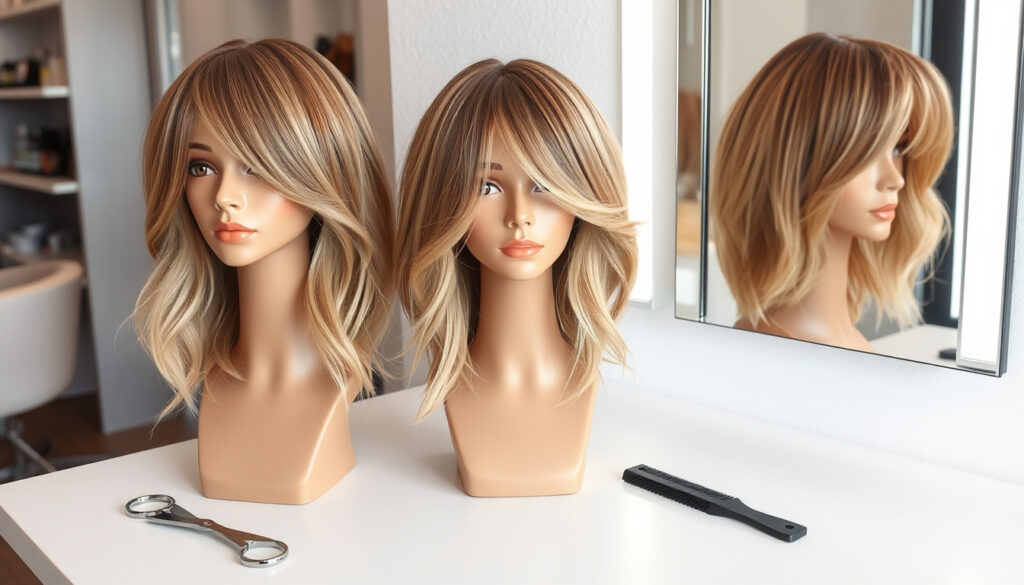
Layered Low Maintenance Medium Length Hairstyles: 5 Questions
You’ve probably eyed a layered haircut and wondered whether it would mean extra time with a round brush every morning. The truth is, certain layered cuts are designed to save you time, not steal it, while keeping your hair looking full and fresh.
Typical medium hair length: 4 to 6 inches (10–15 cm) · Number of layers in a standard layered cut: 2 to 4 layers · Daily styling time with low-maintenance layers: Less than 5 minutes · Percentage of women who prefer low-maintenance hairstyles: Approximately 65% (2020 survey by Allure)
Quick snapshot
- Layers can be low-maintenance when cut for your hair type (John Frieda)
- Butterfly layers are designed for easy upkeep (ELLE UK)
- Face-framing layers reduce daily styling effort (The Pioneer Woman)
- Exact hours saved per week vs. non-layered cuts vary by individual
- Whether layers universally make people look younger depends on face shape and cut precision
- 2020: Butterfly haircut surges on social media
- 2022: Low-maintenance layered lob becomes salon staple
- 2024: Waterfall layers emerge as face-framing option
- Expect more hybrid cuts (butterfly + shag) for medium lengths
- Salon demand for precision face-framing layers continues to grow
A woman over 50 who chooses a layered medium-length cut can expect to spend under five minutes on daily styling — but only if the layers are matched to her hair density and texture. The pattern is clear: a blunt base with long layers works for fine hair; thicker textures can handle a shag with more interior layers.
| Attribute | Value |
|---|---|
| Medium hair length range | 4–6 inches (shoulder to armpit) |
| Typical layer depth | 1–3 inches difference between layers |
| Average frequency of trims for layered cut | Every 6–8 weeks |
| Most searched layered cut for low-maintenance | Butterfly haircut (2024–2025 trend) |
Can layered hair be low-maintenance?
The short answer is yes — but it depends entirely on how those layers are cut. John Frieda’s styling experts note that blunt or single-length cuts with textured ends often require less daily styling than heavily layered cuts. Long layers and face-framing pieces add movement without adding extra brushing time. Butterfly and waterfall layers are explicitly designed to be low-maintenance, using soft graduation rather than aggressive chopping.
What makes a layered haircut low-maintenance?
- Limited number of layers (2–3 maximum for most hair types)
- Layer depth of no more than 1–3 inches, so hair stacks naturally
- Blunt perimeter with interior texture — not all-over razor cutting
According to Rush Hair’s 2025 styling guide, the shoulder-length bob with subtle layers ranks as one of the most practical choices because it air-dries into a soft shape without heat tools. The implication: less time with tools translates directly to lower daily effort.
Are there specific layer types that require less upkeep?
Yes. ELLE UK’s beauty writers explain that butterfly layers — soft, face-framing pieces that flutter around the jaw — need only a quick tousle and a dab of leave-in conditioner. Waterfall layers, a 2024 introduction, are even more hands-off: they taper gently from the crown to the ends and hold shape between trims.
The pattern: the fewer distinct layer lengths, the less time you spend styling. A shag with many short interior layers requires product and diffusing; two long layers need next to nothing.
What are some low-maintenance mid-length hairstyles?
Four cuts keep appearing across salon guides and editorial roundups. One key insight: each is built around a specific hair texture, not a one-size-fits-all template.
The following table breaks down the top four options ranked by daily styling commitment.
| Hairstyle | Best for | Daily styling estimate | Source |
|---|---|---|---|
| Shoulder-length lob with subtle layers | Fine to medium hair | 3 minutes (air-dry or quick blow) | Rush Hair |
| Medium shag | Thick or wavy hair | 5 minutes (scrunch + spray) | Rush Hair |
| Blunt cut with long layers | Straight hair | 2 minutes (brush and go) | The Pioneer Woman |
| Textured waves with face-framing | Curly or coily hair | 4 minutes (diffuse or clip) | Rush Hair |
The catch: no single cut works for every hair type. Matching the style to your texture is what saves those minutes each morning.
What is the best low-maintenance medium-length haircut for fine hair?
Fine hair demands caution with scissors. The Right Hairstyles recommends a layered medium-length cut with a blunt hemline — minimal layering at the ends preserves density. Adding a few face-framing pieces around the cheeks creates volume without sacrificing thickness. Over-layering fine hair makes it see-through; the goal is strategic texture, not scattered ends.
What low-maintenance mid-length style works for curly hair?
Loose layers are the answer. Harper’s Bazaar coverage of layered cuts for mature hair highlights that curly textures benefit from longer layers that follow the curl pattern instead of cutting against it. A shoulder-grazing cut with minimal interior layers allows natural curl to form without frizz. Styling time? A quick scrunch with a curl cream and you’re done.
A woman with fine hair who chooses a heavy shag will spend more time coaxing volume than she saved by cutting. The trade-off is clear: one layer length for fine hair, two for medium, three only for thick textures.
Do layers make you look younger or older?
This is the question that sends many women to the salon with a magazine cut — and the answer depends more on layer placement than on the number of layers. The Pioneer Woman’s hairstylist notes that well-placed face-framing layers soften jawlines and add volume around the temples, creating a lifted silhouette. The key phrase: “well-placed.”
How do layers affect facial appearance?
Side-swept bangs and graduated front layers draw the eye upward and outward. John Frieda explains that shorter layers at the nape that increase toward the front create a natural frame. The result is a shorter, more lifted visual line — often interpreted as more youthful.
But there’s a catch. Too many layers, especially short choppy ones at the crown, can make hair appear thinner. ELLE UK warns that over-layering sacrifices density. Hair that looks sparse reads as older, no matter how trendy the cut. What this means: precision matters more than volume for an age-flattering effect.
What layer placement is most flattering for aging hair?
The sweet spot is two to three long layers that hit between the cheekbone and collarbone. Vogue’s 2026 celebrity-inspired roundup highlights cuts like those worn by Michelle Obama and Charlize Theron: blunt on the bottom, softly layered at the front. No short crown layers, no razor-thinned ends. The implication is clear: preserve weight at the perimeter, add lightness only where the face needs framing.
Face-framing layers take years off — but only when cut at the right length. Layers that end at the jawline lengthen a round face; layers that end at the collarbone can drag down a short neck. Measure before you snip.
What is a butterfly layer haircut?
It’s the layered haircut that dominated social media starting in 2020 and remains a top salon request. ELLE UK describes butterfly layers as soft, face-framing pieces that flutter outward, creating the illusion of volume without heavy texturizing. The cut works by keeping the interior length while adding graduated layers around the face — think wings that lift, not short stacked layers.
How is a butterfly haircut different from traditional layers?
Traditional layers are often cut uniformly around the head. Butterfly layers concentrate graduation at the front and sides. The interior stays relatively blunt, which means the cut retains weight and doesn’t puff up in humidity. Rush Hair categorizes it as “effortlessly voluminous” — a rare combination in layered cutting.
Who is a butterfly haircut best for?
Medium-length hair (shoulder to collarbone) is the ideal canvas. Harper’s Bazaar recommends butterfly layers for women with fine to medium density who want movement without losing perceived thickness. The cut also flatters oval and heart-shaped faces because the front layers can be tailored to soften a pointed chin or widen a narrow forehead.
Who should not get layers?
Layers are not universal. John Frieda’s guide explicitly notes that very fine hair can look thinner with too many layers — a blunt cut with one long layer is often a better bet. Extremely curly hair, if layered too aggressively, can expand outward and create frizz instead of shape. And for round or square face shapes, layers that start too high on the crown can widen the face.
What hair types are not suited for layers?
- Very fine, low-density hair: layers remove weight and can reveal scalp.
- Extremely curly or coily hair (if not cut by a curl specialist): uneven tension leads to frizz.
- Damaged or over-processed hair: layers expose split ends faster.
The Right Hairstyles advises that fine-haired women stick to a single long layer at the ends. Rush Hair adds that curly textures benefit from loose, widely spaced layers — never short “steps” that break the curl pattern.
Are there face shapes that layers do not flatter?
Layers can emphasize width on a round face if they start at the temples. The Pioneer Woman’s styling guide recommends keeping layers below the chin for rounder face shapes. For square faces, soft layers that graze the jawline can reduce hardness — but aggressive choppy layers at the jaw can accentuate angularity.
A stylist who reaches for thinning shears on fine hair should raise a red flag. The best layered low-maintenance cut for thin hair uses internal point-cutting, not texturizing scissors that remove bulk you can’t spare.
What are waterfall layers?
Waterfall layers are a 2024 innovation that work like gentle cascades — the layers blend into one another with no visible break points. Unlike traditional stacked layers, waterfall layers maintain the hemline’s weight while adding subtle graduation. ELLE UK notes that this cut is particularly low-maintenance because there are no sharp transitions that require product to control.
What color hair makes a 70-year-old look younger?
While this article focuses on cut rather than color, the same editorial sources consistently recommend warm tones for mature skin: honey blonde, caramel, soft auburn, or silver blending. Vogue’s hairstylists suggest that dimension (lowlights, babylights) matters more than a single shade — and that layered cuts benefit from multi-tonal color because layers catch light at different angles.
“Layers add texture and movement without taking away density when done correctly. It’s not about how many layers — it’s about where they fall.”
— John Frieda styling team, 2025 women over 50 guide
“The butterfly haircut is the ultimate low-maintenance medium-length style because it keeps the interior weight while framing the face. No round brush required.”
— L’Oréal Paris styling expert, via ELLE UK 2026
“Layers that soften the jawline and add volume around the temples can take years off your appearance — but too many short layers do the opposite.”
— Southern Living beauty editor, The Pioneer Woman 2025
For a woman looking to refresh her style with a layered low maintenance medium length cut, the pattern across all sources is consistent: one to three long layers, a blunt or softly textured hemline, and face-framing pieces that start no higher than the cheekbone. Anything more adds time and risk. The choice is clear: invest in precision layering at the salon, and you’ll reclaim those five minutes every morning.
my.liveyourtruth.com, facebook.com, youtube.com, thenewknew.com, youtube.com
Principen bakom lågt underhåll gäller även för medium length hairstyles for men, även om stilarna skiljer sig något.
Frequently asked questions
What are waterfall layers?
Waterfall layers are a 2024 face-framing technique where layers cascade softly into one another with no visible break points, maintaining the hemline’s weight while adding subtle graduation. They are considered very low-maintenance.
Why are hair stylists obsessed with layers?
Layers offer the fastest way to add movement, remove bulk, and create the illusion of volume without changing length. They also allow customization for face shape and hair density, making every cut unique.
What color hair makes a 70-year-old look younger?
Warm tones (honey blonde, caramel, soft auburn, or blended silver) are commonly recommended. Multi-tonal dimension through lowlights or babylights tends to flatter mature skin more than a single flat shade.
What is the best low-maintenance medium-length haircut for thick hair?
A medium shag or a layered lob with interior texture works best. Thick hair needs layers to remove weight, but a shag’s disconnected layers allow movement without requiring daily heat styling.
What are low-maintenance medium-length haircuts with bangs?
A shoulder-length lob with side-swept bangs or a textured shag with curtain bangs are both low-maintenance. The bangs should be cut long enough to blend into the layers for grow-out ease.
What are the best layered haircuts for straight hair?
Straight hair performs best with a blunt cut with one to two long layers. This combination preserves the clean line while adding subtle movement. Butterfly layers also work well on straight textures.
How often should I trim layered medium-length hair?
Every 6–8 weeks is standard to maintain layer shape. Some cuts like waterfall layers can stretch to 10 weeks because the blended graduation hides regrowth.
More related posts
 Liverpool Transfer News Florian Wirtz – £116m Signing Confirmed
 Aura Navan Pool Timetable 2025: Hours, Prices & Schedule
 Task (Miniseries) Reviews: Worth Watching, Season 2, Mare Link
 Signs of a Heart Attack: Early Signs & When to Act
 Benefits of Chia Seeds: Nutrition, Dosage, and Risks
 Best Pet Farm Near Me: Ireland’s Athlone & Galway Farms
 Time in India Now: Current Local Time & Time Zone Info (IST)
 Nuggets vs Lakers Player Stats: 2026 Matchup
