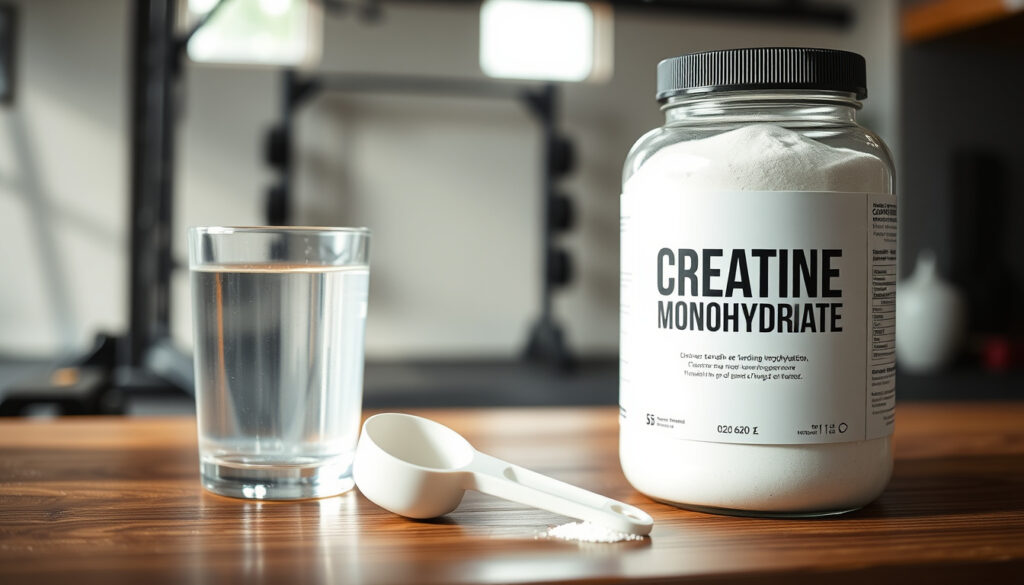
What Does Creatine Do? Benefits, Side Effects, Safety
If you’ve ever wondered why gym-goers swear by a white powder in their pre-workout shake, you’re not alone — creatine is one of the most researched supplements on the planet, yet most people only know half the story. This guide cuts through the noise to explain exactly what creatine does, from powering your muscles to potentially supporting your brain, and who should think twice before taking it.
Creatine stored in muscles: Approximately 95% of the body’s creatine is stored in skeletal muscle. ·
Strength increase with creatine: Studies show 5–15% improvement in strength and power during resistance training. ·
Daily production: The body naturally produces about 1–2 grams of creatine per day from amino acids. ·
Supplement form: Creatine monohydrate is the most researched and widely used form of creatine supplement. ·
Safety profile: Creatine is regarded as safe when taken at recommended doses (3–5 g/day) for up to 5 years.
Quick snapshot
- Creatine improves strength and power in resistance training (International Society of Sports Nutrition position stand)
- Daily supplementation of 3–5g is safe for most people (PMC safety review)
- Creatine is not a steroid and does not cause kidney damage in healthy individuals (International Society of Sports Nutrition position stand)
- Long-term effects of creatine on cognitive decline in aging populations need more research (PMC review on cognitive function)
- Optimal dosing for brain benefits is not established (PMC review on cognitive function)
- Interaction with specific medications (e.g., NSAIDs) is poorly studied (PMC safety review)
- Muscle creatine levels peak within 7–30 days depending on dosing strategy (International Society of Sports Nutrition position stand)
- Strength gains typically appear after 2–4 weeks of consistent supplementation with training (International Society of Sports Nutrition position stand)
- Effects are reversible; stopping supplementation gradually reduces muscle creatine levels (International Society of Sports Nutrition position stand)
- Research is expanding into creatine for brain health, aging, and neurodegenerative conditions (University of Missouri Health Care article)
- Clinical guidelines for creatine use in kidney disease populations are still evolving (PMC safety review) (University of Missouri Health Care article)
- More studies are needed on creatine’s effects in women across hormonal life stages (International Society of Sports Nutrition position stand) (University of Missouri Health Care article)
Five key facts, one pattern: creatine’s effects are well-documented for muscle performance but remain an open frontier for brain and clinical applications.
| Label | Value |
|---|---|
| What is it? | A naturally occurring compound made from amino acids, stored mainly in muscle. |
| How it works | Recycles ATP to provide quick energy for short bursts of exercise. |
| Common dose | 3–5 grams per day; some use a loading phase of 20g/day for 5 days. |
| Onset of effect | Muscle creatine levels peak within 7–30 days depending on dosing strategy. |
| Safety rating | Generally recognized as safe (GRAS) by FDA; no serious adverse effects in healthy adults. |
What does creatine do?
How does creatine supply energy to muscles?
- Creatine helps regenerate ATP, the primary energy currency of cells, during high-intensity activity (International Society of Sports Nutrition (ISSN) position stand).
- Supplementation can increase muscle creatine stores by 20–40% (International Society of Sports Nutrition (ISSN) position stand).
- This extra energy translates to 5–15% improvements in strength and power during resistance training (International Society of Sports Nutrition (ISSN) position stand).
Think of creatine as a backup battery for your cells. When you sprint, lift heavy, or do any short burst of intense effort, your muscles burn through ATP — their primary fuel — in seconds. Creatine steps in to recycle that ATP, giving you a few more reps or a faster sprint. The International Society of Sports Nutrition (ISSN) position stand confirms that creatine supplementation, especially when combined with resistance training, leads to greater gains in muscle strength, muscle size, and athletic performance.
For anyone doing high-intensity training, creatine is the difference between grinding out 8 reps and squeezing out 10. That extra volume drives muscle growth over weeks.
Does creatine improve brain function?
- Evidence suggests creatine may support cognitive performance, especially in vegetarians or older adults (PMC review on cognitive function).
- A systematic review found oral creatine administration may improve short-term memory and intelligence/reasoning in healthy individuals (PMC review on cognitive function).
- The cognitive evidence is not uniform across all domains, and benefits appear more likely in specific tasks or subgroups than as a broad general effect (PMC review on cognitive function).
Your brain, like your muscles, uses ATP for energy. The same creatine-phosphate system that powers your biceps also helps neurons fire. A systematic review from the National Institutes of Health (NIH) found that creatine supplementation can improve short-term memory and reasoning in healthy people — but the effect is strongest in those with lower baseline creatine levels, such as vegetarians and vegans who get less creatine from diet.
The implication: creatine’s brain benefits are real but situational. If you’re a meat-eater with normal creatine stores, the cognitive boost may be modest. For older adults or plant-based eaters, the gains could be more meaningful.
What are the side effects of creatine?
What are the downsides of creatine?
- Common side effects include water retention, digestive upset, and muscle cramping (though inconsistent evidence) (GoodRx).
- High doses (>10 g/day) may increase the risk of gastrointestinal distress (PMC safety review).
- Short-term creatine use can cause modest water retention or weight gain, which is usually due to increased intracellular water rather than fat gain (GoodRx).
Most side effects are mild and manageable. The most common complaint is water retention — your muscles pull in extra water, which can make the scale go up by 2–4 pounds in the first week. This isn’t fat gain; it’s your muscle cells becoming more hydrated. Digestive issues like bloating or cramping usually happen when people take too much too fast, especially during a loading phase of 20 grams per day.
Creatine can raise serum creatinine levels, which may confuse kidney-function testing without necessarily indicating kidney injury. If you’re getting blood work, tell your doctor you’re taking creatine.
Can creatine cause dehydration or muscle cramps?
- No strong evidence links creatine to kidney damage in healthy individuals, but caution is advised for those with pre-existing kidney disease (PMC safety review).
- Multiple studies summarized by GoodRx found creatine does not appear to cause problems in kidney function in healthy people (GoodRx).
- The safety literature notes that concerns about kidney damage are not supported in healthy adults using standard doses, but monitoring is more relevant in people with pre-existing kidney disease (PMC safety review).
The old rumor that creatine causes dehydration or cramping has been largely debunked. A 2025 safety review from the National Institutes of Health (NIH) found no evidence that creatine increases cramping risk in healthy athletes. The real concern is kidney function — not because creatine damages kidneys, but because it can elevate serum creatinine, a marker doctors use to assess kidney health. For healthy people, this is a false alarm. For those with existing kidney disease, it’s a genuine red flag.
The trade-off: creatine is remarkably safe for healthy adults, but its effect on lab markers means you need to be transparent with your healthcare provider if you’re being monitored for kidney function.
Is it good to have creatine every day?
What is the recommended daily dose?
- A standard daily dose of 3–5 grams is safe and effective for long-term use (up to 5 years) (International Society of Sports Nutrition position stand).
- A loading phase (20 g/day for 5–7 days) can saturate muscles faster, but daily maintenance is sufficient (International Society of Sports Nutrition position stand).
- Cycling is not necessary; continuous daily supplementation maintains elevated muscle creatine levels (International Society of Sports Nutrition position stand).
Yes — taking creatine every day is not only safe, it’s the most effective way to maintain elevated muscle stores. The International Society of Sports Nutrition (ISSN) recommends 3–5 grams daily for healthy adults. You can do a loading phase of 20 grams per day for 5–7 days to saturate muscles faster, but it’s not necessary. Skipping the loading phase just means it takes about 3–4 weeks to reach peak levels.
Why this matters: consistency beats intensity. A daily 5-gram scoop is simpler, causes fewer digestive issues, and keeps your muscles topped up without the bloating that sometimes comes with loading.
Should you cycle creatine?
- Cycling is not necessary; continuous daily supplementation maintains elevated muscle creatine levels (International Society of Sports Nutrition position stand).
- Effects are reversible; stopping supplementation gradually reduces muscle creatine levels (International Society of Sports Nutrition position stand).
Unlike some supplements where your body builds tolerance, creatine doesn’t require cycling. Your muscles simply maintain a steady level as long as you keep taking it. Stop, and levels gradually return to baseline over several weeks. There’s no withdrawal, no crash, and no need for “off” periods.
Who should avoid creatine?
Can I take creatine if I have PKD?
- Individuals with pre-existing kidney disease, including polycystic kidney disease (PKD), should avoid creatine or consult a doctor (University of Missouri Health Care article).
- Creatine is not recommended for people with uncontrolled high blood pressure or those taking nephrotoxic medications (PMC safety review).
- Pregnant or nursing women and adolescents should use caution due to limited safety data (International Society of Sports Nutrition position stand).
This is the most important caution in the entire article. If you have polycystic kidney disease (PKD), chronic kidney disease, or any condition that impairs kidney function, creatine is not for you. The University of Missouri Health Care advises that people with kidney disease should consult a clinician before using creatine. The reason isn’t that creatine is toxic — it’s that your kidneys already have reduced filtering capacity, and the added metabolic load of processing creatine could accelerate decline.
For healthy adults, creatine is safe. For anyone with kidney disease, PKD, or taking nephrotoxic medications like NSAIDs long-term, the risk-benefit calculation flips entirely. Don’t guess — get a blood test and talk to your doctor.
Should people with kidney disease avoid creatine?
- NCCIH and other public-health summaries commonly advise that people with kidney disease should consult a clinician before using creatine (University of Missouri Health Care article).
- In a position stand, creatine was reported to have no adverse effects on kidney function in healthy subjects over long-term use within recommended doses (International Society of Sports Nutrition position stand).
- Evidence cited in the ISSN literature includes no detected adverse kidney effects in some special populations, including type 2 diabetes patients in one 12-week study (International Society of Sports Nutrition position stand).
The distinction is critical: healthy kidneys handle creatine without issue. Damaged kidneys don’t. The ISSN position stand found no adverse kidney effects in healthy subjects or even in type 2 diabetes patients over 12 weeks. But that doesn’t apply to stage 3–5 chronic kidney disease or PKD. If you fall into the latter group, the safest answer is: don’t take creatine.
What happens after 1 month of creatine?
How soon do strength gains appear?
- After one month, most users experience increased muscle mass, strength, and power, especially when combined with resistance training (International Society of Sports Nutrition position stand).
- Water retention often subsides after the first few weeks (GoodRx).
- Effects are reversible; stopping supplementation gradually reduces muscle creatine levels (International Society of Sports Nutrition position stand).
By week 4, the changes become visible. Your muscles look fuller (that’s the water retention doing its job), your lifts are heavier, and you’re recovering faster between sets. The ISSN position stand confirms that creatine combined with resistance training produces measurable gains in lean mass and strength within this timeframe. The initial water bloat — which some people find uncomfortable — typically settles after 2–3 weeks as your body adjusts.
The pattern: creatine doesn’t build muscle by itself. It gives you the energy to train harder, and that extra training stimulus drives growth. Without the training, you’ll just have slightly heavier muscles.
Does creatine cause permanent changes?
- Effects are reversible; stopping supplementation gradually reduces muscle creatine levels (International Society of Sports Nutrition position stand).
No — creatine doesn’t cause permanent changes. Stop taking it, and your muscle creatine levels return to baseline over 4–6 weeks. Any muscle mass you gained from training harder while on creatine will stick around only if you maintain your training intensity. The supplement itself leaves no lasting footprint.
Upsides
- Improves strength and power by 5–15% in resistance training (ISSN)
- Increases lean muscle mass when combined with training (ISSN)
- May improve short-term memory and reasoning (NIH review)
- Safe for long-term use (up to 5 years) at 3–5g/day (PMC safety review)
- Inexpensive and widely available as creatine monohydrate
Downsides
- Water retention and temporary weight gain in first 1–2 weeks (GoodRx)
- Digestive upset at high doses (>10g/day) (PMC safety review)
- Can elevate serum creatinine, confusing kidney function tests (PMC safety review)
- Not recommended for people with kidney disease or PKD (University of Missouri Health Care)
- Limited safety data for pregnant/nursing women and adolescents (ISSN)
“Creatine supplies energy to your muscles. Many people take creatine supplements to build strength and promote brain health.”
— Cleveland Clinic
“Creatine supplements, especially when combined with resistance training, can lead to greater gains in muscle strength, muscle size and athletic performance.”
— Mayo Clinic
“Creatine is used to increase muscle mass, boost strength, and enhance exercise performance.”
— Healthline
Creatine is not a magic pill, but it’s about as close as sports nutrition gets. For healthy adults who train with intensity, the evidence is overwhelming: it works, it’s safe, and the side effects are mild. The real frontier — brain health, aging, and clinical applications — is where the next decade of research will land. For anyone with kidney concerns, the answer is equally clear: sit this one out. For the rest, 5 grams a day is one of the simplest, cheapest, and most evidence-backed decisions you can make for your training.
ubiehealth.com, youtube.com, youtube.com, ubiehealth.com, scholars.nova.edu, ubiehealth.com
För den som är nyfiken på vetenskapen bakom effekterna sammanfattar en australisk resurs de entydiga hälsofördelar med kreatin i en lättöverskådlig guide.
Frequently asked questions
Is creatine a steroid?
No. Creatine is a naturally occurring compound made from amino acids, not a hormone. Steroids are synthetic hormones that mimic testosterone. Creatine works by recycling ATP for energy — a completely different mechanism. The International Society of Sports Nutrition classifies creatine as a dietary supplement, not a performance-enhancing drug.
Does creatine cause hair loss?
There is no strong evidence linking creatine to hair loss. One small 2009 study in rugby players found a slight increase in a hormone called DHT, which is linked to hair loss, but no actual hair loss was observed. Larger, more recent studies have not confirmed this finding. The PMC safety review does not list hair loss as a known side effect.
Can creatine help with weight loss?
Indirectly, yes. Creatine doesn’t burn fat, but it helps you train harder, which can increase calorie expenditure and preserve lean muscle during a calorie deficit. More muscle means a higher resting metabolism. However, the initial water retention (2–4 pounds) may mask fat loss on the scale for the first few weeks.
What is the best form of creatine?
Creatine monohydrate is the gold standard. It’s the most researched, most effective, and cheapest form. Other forms like creatine ethyl ester, hydrochloride (HCL), or buffered creatine claim better absorption, but studies show they offer no advantage over monohydrate. The ISSN position stand recommends creatine monohydrate as the supplement of choice.
Does creatine work for women the same as men?
Yes, the mechanism is the same. Women have lower baseline creatine stores than men, which means they may actually see a proportionally larger response to supplementation. However, most research has been done on men, so data on women across menstrual cycles, pregnancy, and menopause is limited. The ISSN notes that more research is needed in female populations.
Should I take creatine before or after my workout?
Timing matters less than consistency. Some studies suggest taking creatine after your workout, when muscles are more receptive to nutrient uptake, but the difference is small. The most important factor is taking it daily. The ISSN states that daily supplementation of 3–5 grams is effective regardless of timing.
Can creatine improve endurance exercise?
Creatine is primarily beneficial for short, high-intensity activities (sprinting, lifting, jumping), not long-duration endurance exercise like marathon running. For endurance athletes, the added water weight may even be a disadvantage. However, creatine can help with interval training and repeated sprints, which are common in sports like soccer and basketball.
More related posts
 Driving Home for Christmas Lyrics – Chris Rea Full Text
 House for Sale Wexford: 2025 Listings & Buyer Guide
 Long Term Illness Card: Conditions, Benefits & How to Apply
 Protect the Dolls Shirt: Meaning, Where to Buy & More
 The High Kings’ Rocky Road to Dublin Lyrics Meaning
 Under the Banner of Heaven – True Story Behind Book and Series
 Sophie Turner Lara Croft: Casting, Injury & 2026 Series
 Meghan, Duchess of Sussex: Biography, Facts, and FAQs
